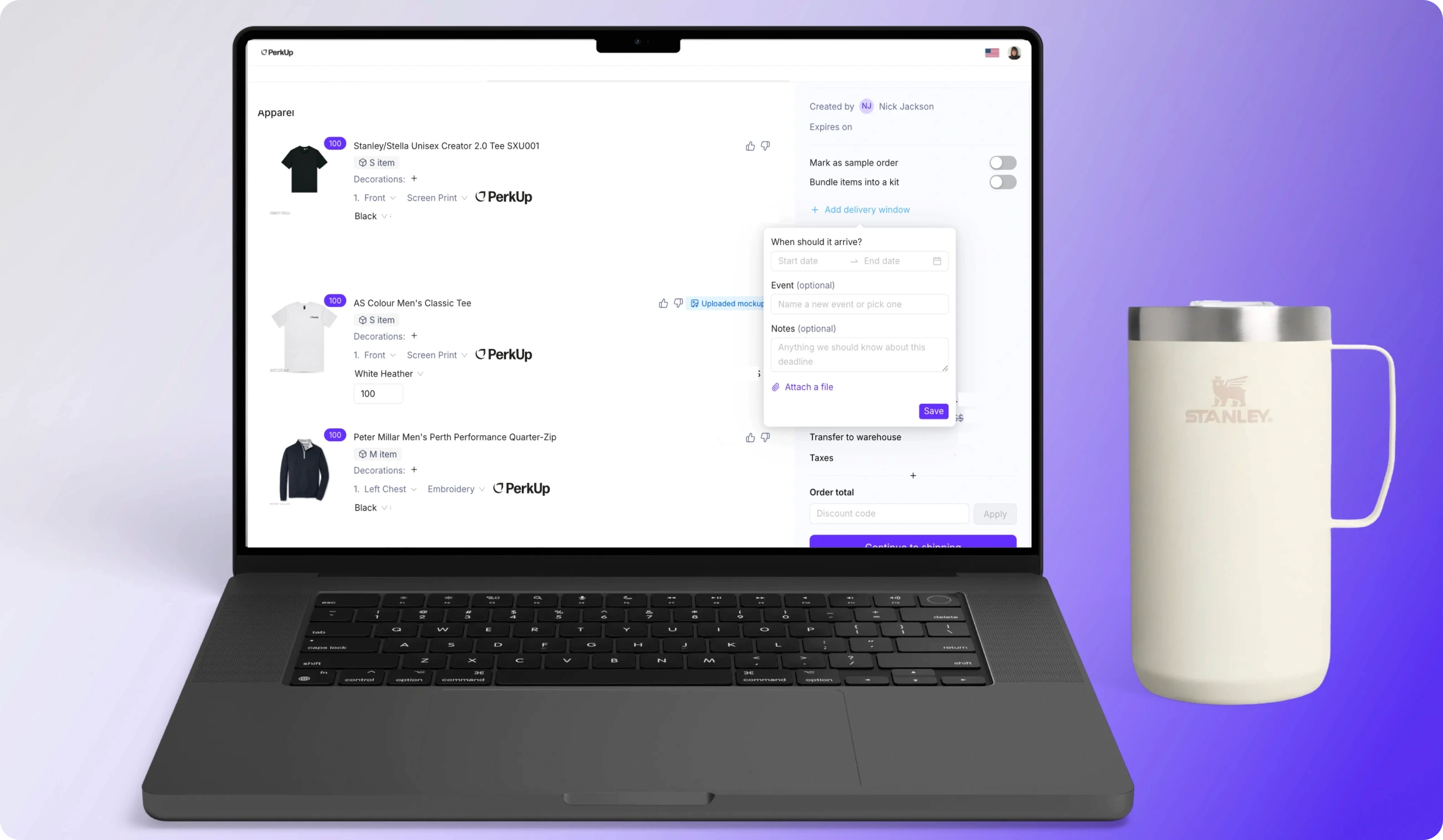
When your goal is to give swag that your recipients will genuinely want to keep and talk about, what would you pick? Your answer might range from On Demand apparel swag from popular brands like Nike or Carhartt to durable drinkware like Stanley and YETI. But what if we tell you that you don’t have to settle for the ‘classic’ swag and instead opt for something unconventional, something more creative, which is a custom plushie?
Yes, you read that right! Custom plushies are making a strong case as one of the most creative swag ideas out there. That’s because of a few things: one, they’re fun and unexpected, turning a swag giveaway into something that can make your recipients smile; two, they’re memorable because who would’ve thought you’d give away custom plushies at a convention; and three, they’re cute.
So, if you’re thinking about what your next swag should be for your trade show booth or looking for unique swag items to stand out at a marketing event, custom plush toys deserve to be on your list. And in this blog, we’ll tell you exactly why.
Are custom plushies effective swag?
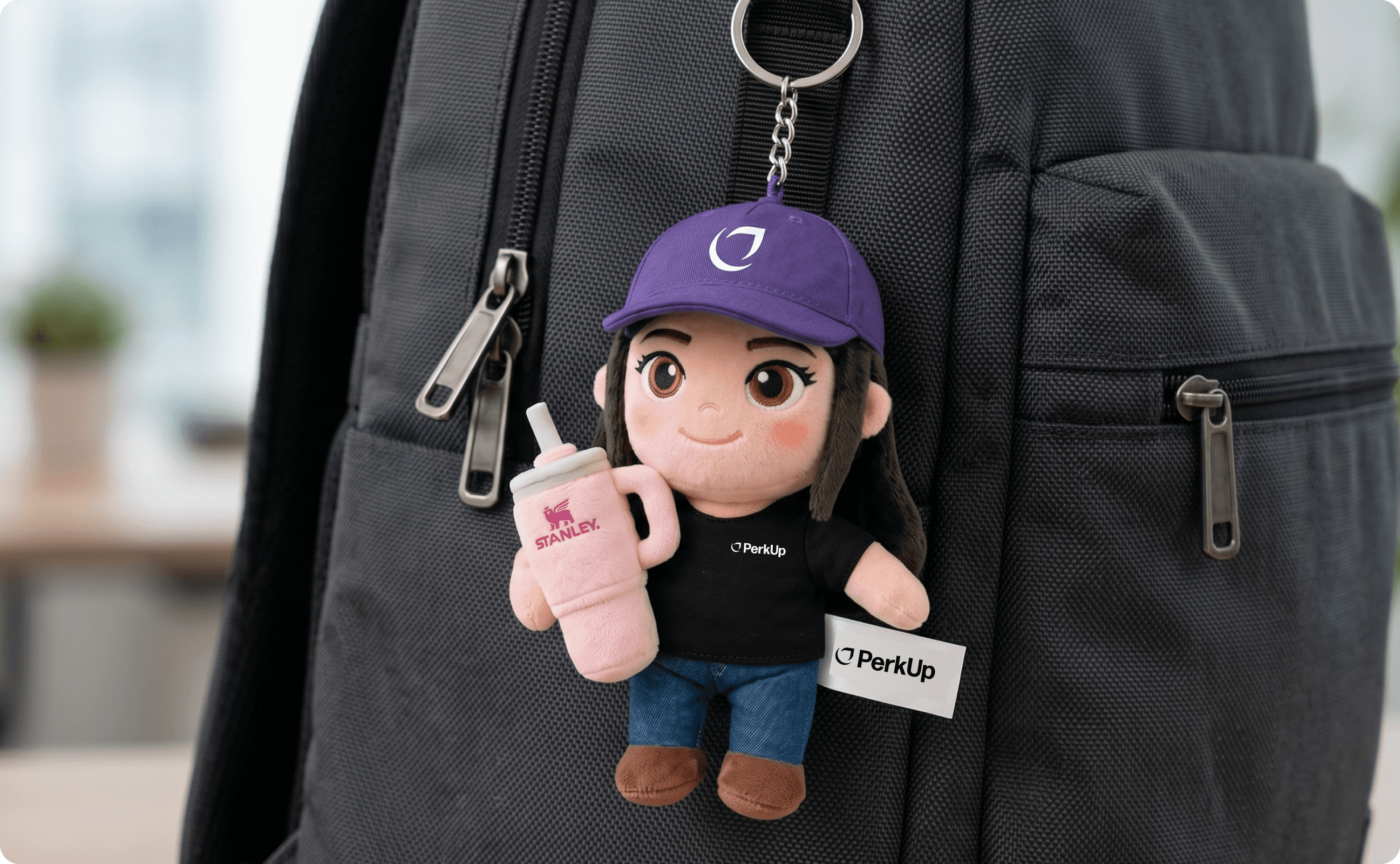
Definitely! There’s a reason people don’t throw away stuffed animals. Custom stuffed animals, after all, trigger a psychological response that most promotional products simply can’t match. They feel personal and warm. And because of that, they stick around much longer than the average giveaway item. Here are the other reasons why custom plushies are highly effective:
They create an emotional connection
Plush toys are linked to feelings of comfort and nostalgia, and that applies to adults just as much as kids. When your recipient receives a custom plush mascot or a branded plush character, the reaction is almost always positive. That’s a powerful starting point for any brand interaction. People who feel good about a brand remember it, and a plush toy sitting on someone’s desk is a passive brand impression delivered day after day.
They have a longer shelf life than most swag
Think about how quickly typical swag ideas get cycled out. A pen lasts a few weeks, maybe a month. An apparel item can be worn for a year before it gets included in the charity box. A plush toy? It can sit on a desk, a shelf, or a bookcase for years. That kind of longevity means more impressions and more brand visibility. And because people tend to display them rather than store them away, your brand stays visible in a very natural way.
They’re inherently shareable
Plushies photograph well, and people love sharing pictures of them. A well-designed branded stuffed animal at a conference booth or inside an onboarding box is almost guaranteed to show up on social media.
They work across demographics
Who doesn’t love a stuffed toy? That’s one of the best things about custom plush toys: their universal appeal. They resonate with new grads joining a startup, seasoned executives at an industry summit, and everyone in between! You don’t have to worry about sizing, and they translate well across cultures, which makes them especially useful if you’re a company with global teams.
They’re perfect for employees with children
Here's something a lot of swag programs overlook: employees and other recipients don't just exist in a vacuum. Many of them have families, and when a branded item shows up at home that a kid immediately latches onto, that's a whole different level of brand connection. A custom plush toy that your recipient or employee’s child adopts as their new favorite stuffed animal? That plush is going on car rides, to school, and to bed. The brand becomes part of the household in a way that no tumbler or laptop sticker ever could.
One thing to keep in mind, though: if your plushies are intended for children, safety certifications come into play. In the US, toys for children 12 and under must comply with ASTM F963 and CPSIA regulations, which means third-party lab testing and a Children’s Product Certificate (CPC) are required before distribution. In Europe, CE marking and the EN 71 standard apply instead. If your plushies are purely promotional giveaways for adults, these rules typically don’t apply, but it’s worth flagging with your manufacturer if children could end up being the ones using them. We’ll go deeper into how certifications work (and how they affect pricing) later in this blog.
Where can you use custom plushies as swag?
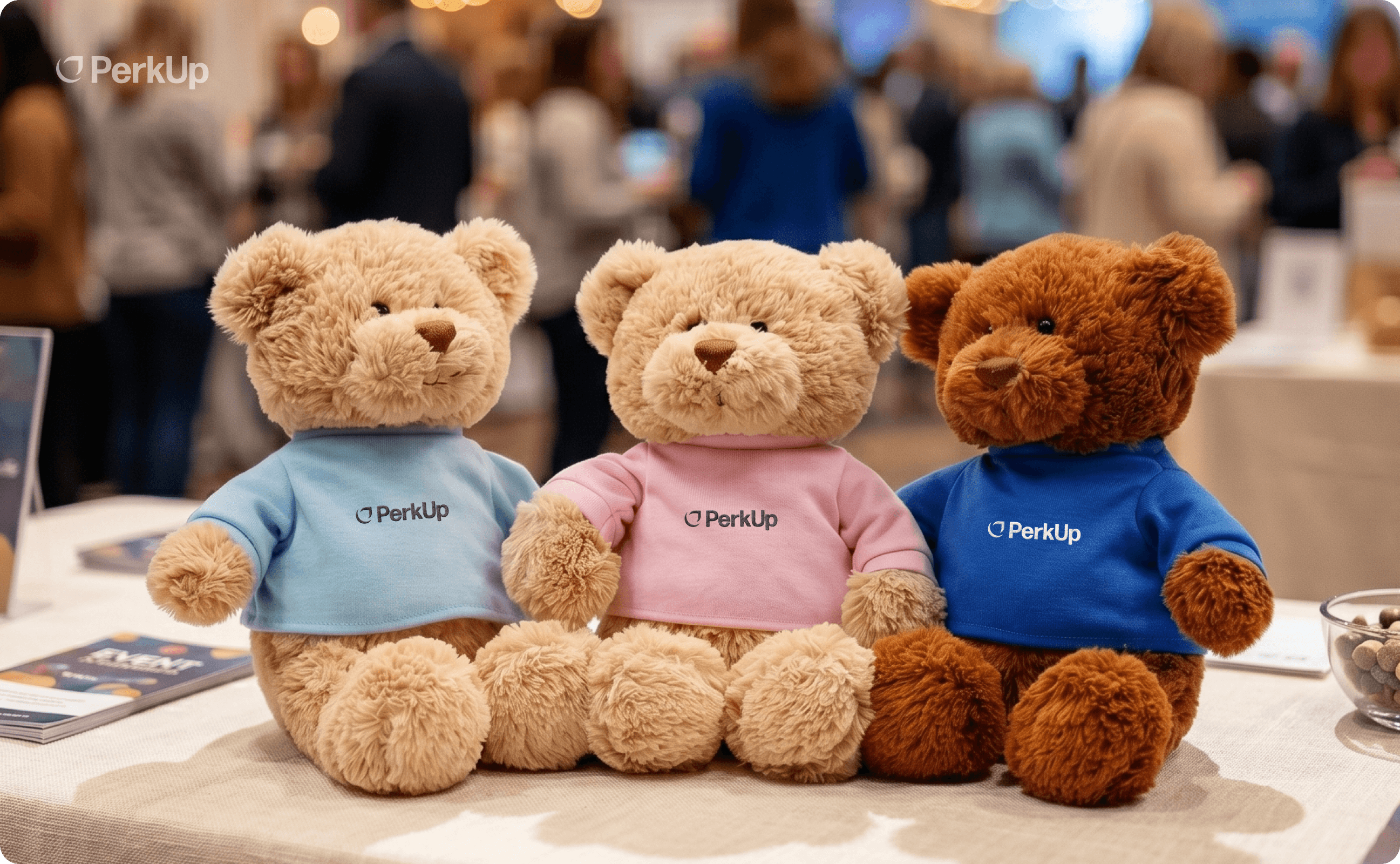
The beauty of plushies as event swag or corporate swag ideas is their versatility. So, here are some of the most impactful places to put them to work.
Trade shows and conferences: How do you get people to actually stop at your booth? Custom plushies. They draw attention and spark conversations, unlike a flyer or brochure that ends up in the trash. For trade shows, keychain-sized plushies (around 3 to 5 inches) work well because attendees are already juggling bags, brochures, and other giveaways.
New hire onboarding kits: As we always say, first impressions matter. Including a custom plush mascot in your new hire kit immediately tells your employee that your company culture has personality. Desk-sized plushies (6 to 10 inches) are ideal here since they’re big enough to be a proper welcome gift but compact enough to sit on a desk or shelf without taking over the workspace.
Product launches and brand activations: Launching a new product or running a pop-up experience? Custom plush toys designed to match the campaign theme create buzz and give attendees a tangible takeaway that keeps the launch in their memory. Make it into a limited edition, too, to make it into a collectible moment! Medium-sized plushies (8 to 12 inches) tend to work best for these occasions since they feel premium and substantial without being too bulky to carry home.
Client and partner appreciation gifts: A thoughtfully designed, branded stuffed animal that represents your company’s mascot or brand personality will earn you a spot on your clients’ and partners’ desks. For client-facing gifts, aim for the six to ten inch range with higher-quality materials; these should feel premium and intentional.
Hackathons and internal company events: Hackathons, team off-sites, and internal competitions are all opportunities to hand out custom stuffed animals as prizes or participation rewards. They photograph well for internal comms and social channels, and they give employees something fun that reminds them of a great team experience.
Holiday and seasonal gifting campaigns: Sometimes, holiday gifts can feel transactional, but a festive custom plushie adds a layer of warmth that a gift card alone doesn’t. Seasonal plushies give your creative swag ideas a personal touch that your recipients will appreciate.
Fundraisers and charity partnerships: If your company supports a charitable cause, plush toys can serve as a tangible representation of that partnership. A custom plush designed around the cause, like an animal for a wildlife conservation initiative, doubles as both a promotional item and a conversation starter about the mission.
Campus recruiting and career fairs: Standing out at a career fair full of tech companies, consulting firms, and startups is no small task. A booth stocked with custom plushies immediately signals that your company doesn’t take itself too seriously, and students love them. Keychain-sized or mini plushies (3 to 5 inches) are the way to go here since you’ll likely be giving them out in volume, and smaller sizes keep costs manageable while still making an impact. That’s a win!
Do custom plushies need safety certifications?
The answer to this question depends entirely on who your plushie is intended for. If your custom plushies are promotional items for adults, like desk accessories at a conference or swag for employees, toy safety regulations generally don’t apply. But the moment children become the likely end users, certification requirements kick in, and the specific requirements vary based on the age group. Let’s break each one down.
Promotional plushies for adults
As mentioned earlier, if your plushies are branded corporate swag meant for adult recipients (meaning they’re specifically for employee desk items), they’re not classified as children’s products under US law. That said, if there’s any reasonable chance a child could end up using the plush, like if it’s going into a family-oriented gift box or a tradeshow giveaway where it’s likely to be given to a child, it’s worth treating it as a children’s product to protect both your company and the platform you’re distributing through from potential liability.
Plushies for children ages 3 to 12
So, let’s say that you want to err on the safe side for your plushies. Then, you need to know that under US regulations, any toy designed or intended for children 12 and under must be tested by a CPSC-accepted third-party lab and certified with a Children’s Product Certificate (CPC). For plush toys, this means compliance with ASTM F963 (the mandatory toy safety standard), which covers mechanical testing like seam strength, torque, and tension tests, as well as chemical testing for heavy metals in surface coatings and flammability testing. The age rating determines the severity of testing; for example, a plush rated for ages 3 to 5 will face different use-and-abuse test forces than one rated for ages 6 to 12. Products in this age range that contain or could produce small parts must carry a warning label (and you’ve most likely seen this, the familiar “WARNING: CHOKING HAZARD – Small parts. Not for children under 3 yrs.”).
Baby-safe plushies (under 3 years old)
Now, if it’s for children under 3 years old? That’s when the requirements get significantly stricter. Plushies intended for babies and toddlers (under 36 months) must comply with the small parts ban under 16 CFR Part 1501, which means the plush cannot contain any component, whether it’s a plastic eye, a button, or a decorative accessory, that could detach and fit inside the CPSC small parts test cylinder (1.25 inches wide by 2.25 inches long). The use-and-abuse testing is also more aggressive at this age level. 16 CFR 1500.51 covers test forces simulating handling by children 0 to 18 months, while 16 CFR 1500.52 covers 18 to 36 months. Both involve impact, torque, tension, and compression tests designed to simulate how a baby would interact with the product. Chemical restrictions are also tighter; any accessible component that could be mouthed or ingested faces stricter limits on heavy metals and phthalates. And that’s just for US!
In Europe, the equivalent framework is the CE marking under the EU Toy Safety Directive 2009/48/EC, with the EN 71 standard series serving as the technical backbone. EN 71 is split into multiple parts, but almost every plush toy needs to pass at least the first three: EN 71-1 (mechanical and physical properties, including tension, drop, and small parts tests), EN 71-2 (flammability, ensuring the plush doesn’t burn rapidly), and EN 71-3 (migration of toxic elements like lead, cadmium, and arsenic from materials that could be licked or swallowed).
Just like in the US, the requirements get stricter for toys intended for children under 36 months. A plush with stitched eyes and no detachable parts may be fine for toddlers, but one with plastic sequins or snap-on accessories would need to pass small parts testing and may require a “Not suitable for children under 36 months” label. EN 71 compliance supports the CE marking process, which is legally required before any toy can be sold in the EU or EEA market.
Certifications aren’t one-and-done
Do note that if you change the fabric, stuffing material, factory, or any component in the production process after initial certification, a new round of lab testing is required to maintain compliance. You can’t simply reuse an old test report for a new material. This is important for both you and the platform you’re distributing through, since ensuring proper certification protects everyone involved from liability. So, be very careful and make sure that your custom plush toy has passed approval before signing it off to your swag vendor.










What factors affect the cost of custom plushies?
Not all custom plushies cost the same, and understanding what drives the price up or down can help you make smarter decisions when planning your swag budget.
Fur quality and material type
The type of fabric used for the outer shell of a custom plushie is one of the biggest cost drivers of this swag item. Standard polyester plush is the most affordable and works well for most promotional use cases. Crystal super soft fabric, on the other hand, has a shinier, more premium feel and costs a bit more. Meanwhile, short-pile PV fleece gives a smooth, polished look, and minky fabric offers a fur-like texture that’s popular for higher-end plushies but is also stretchier and harder to work with, which adds to production costs. If you’re going with eco-friendly or recycled materials, expect a slight premium price bump there as well.
Size
This is pretty much straightforward. As with anything else, the bigger the item, the more expensive it can be. The same goes for plushies: bigger custom plush costs more. Take, for example, a keychain-sized plush around 3-5 inches. That will definitely be cheaper compared to a desk-sized one that’s 6-10 inches, which in turn costs less than a large twelve-inch-plus collectible. Size also impacts shipping and warehousing costs, so it’s not just the production price that goes up.
Design complexity
The design complexity, of course, also affects your plushie’s price. For instance, a simple plush shape with a one-color logo on a t-shirt accessory is going to cost much less than a fully custom sculpted character with multiple fabric colors, embroidered details, custom accessories, and unique proportions. Every additional design element, whether it’s a second logo placement, a removable accessory, or detailed embroidery on the face, adds labor and material cost.
Customization and branding details
Beyond the plush itself, branding additions like custom hang tags, printed inner labels, branded packaging, or custom boxes all add to the per-unit cost. These details can elevate the perceived value of your plushie significantly, but they’re worth budgeting for separately.
Safety certifications
As we explained above, if your plushies need to be certified for children, you’ll need to consider testing costs. Third-party lab testing through a CPSC-accepted facility typically runs $300 to $800 per design, depending on the number of materials, colors, and components being tested. Baby-certified plushies (under 3 years) require stricter and more extensive testing than those rated for ages 3 to 12, which pushes costs toward the higher end of that range. These are one-time costs per design, but they need to be factored into your overall budget, especially if you’re producing multiple plushie styles. Commonly, your swag vendor or partner will handle this on your behalf, but the costs will still be included in your order, so bear that in mind.
Order quantity
Last but not least, the number of your order also affects the custom plush price. That’s because bulk orders bring the per-unit cost down. Most manufacturers offer price breaks at certain volume thresholds, so ordering 500 units will be notably cheaper per piece than ordering 100. If you’re planning to use the same plushie design across multiple programs (trade shows, onboarding, and holidays, among others), consolidating into a single larger order is one of the easiest ways to reduce costs.
How pricing works in practice: two sample scenarios
To give you a clearer picture of how these factors stack up, here's a side-by-side look at two hypothetical plushie orders with different specs, both at 500 units.
Scenario A: Simple trade show giveaway (500 units)
Size: Keychain plush, 4 inches
Material: Standard polyester plush
Design: Simple shape (bear), one-color logo on a mini t-shirt accessory
Branding: Standard hang tag
Certification: None (adult promotional item)
Estimated base cost per unit: ~$4
Certification cost: $0
Estimated total per unit: ~$4
Estimated total order cost: ~$2,000
Scenario B: Premium onboarding kit plushie, child-safe (500 units)
Size: Desk-sized plush, 10 inches
Material: Crystal super soft fabric
Design: Fully custom sculpted mascot, multi-color, embroidered face details, removable branded cape accessory
Branding: Custom box, printed inner label, branded tissue wrap
Certification: Child-safe (ages 3 to 12), ASTM F963 + CPC
Estimated base cost per unit: ~$12
Certification cost (one-time): ~$500 ($1 per unit across 500)
Estimated total per unit: ~$13
Estimated total order cost: ~$6,500
The difference between the two comes down to size, material quality, design complexity, and whether certification is needed. Scenario A keeps things lean for high-volume distribution, while Scenario B invests in a premium product that justifies a higher per-unit cost because it's designed to be a keepsake, not just a giveaway. If Scenario B needed baby-safe certification (under 3 years), the testing cost would push closer to $800, adding roughly another $0.60 per unit at 500 units.
And, if we’re just looking at the numbers, that’s already an estimated $9 difference between the two. As such, make sure to take note of the considerations we provided above to avoid any unnecessary costs or revisions.
Step-By-Step Process for Creating Custom Plushies For Your Brand
So, now you know more about certifications and pricing. If you want to push through with giving away custom plushies with those considerations, then here are some helpful tips on the step-by-step process of ordering these custom plush toys for your recipients.
Step 1: Define your concept and brand direction
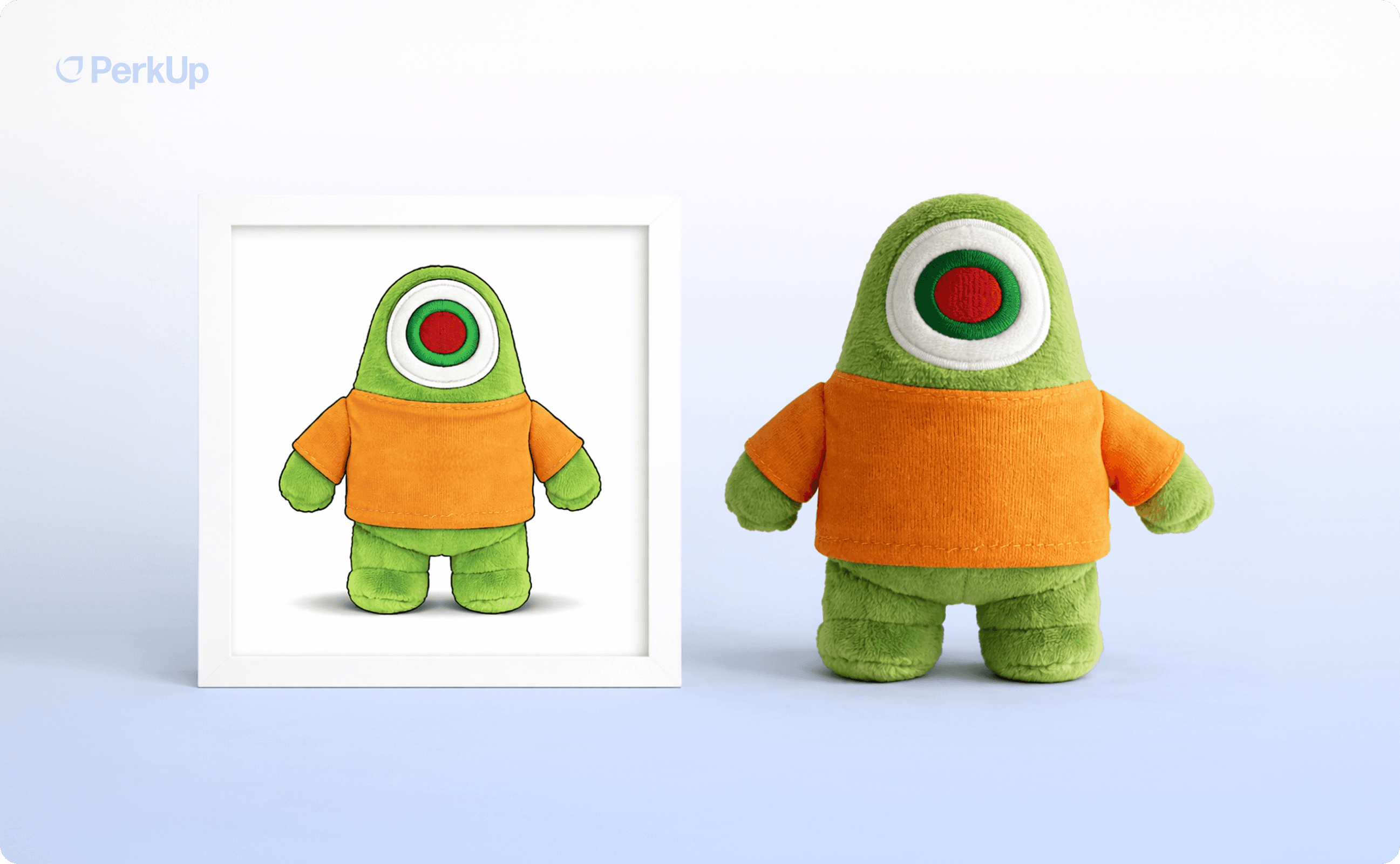
Start by figuring out what your plushie should represent. If your company has a mascot, that’s the obvious starting point. If not, think about what visual elements represent your brand’s personality. Color palette, typography-inspired accessories, or even abstract shapes can all be translated into plush form. The goal is for someone to look at the plush and instantly connect it to your company.
And here’s the thing: you don’t need to come in with a polished design. With platforms like PerkUp, you can share a rough sketch, a reference image, or even a concept generated in ChatGPT, and their team will take it from there. The point is to have a direction, not a finished product.
Step 2: Work with a design and sourcing team
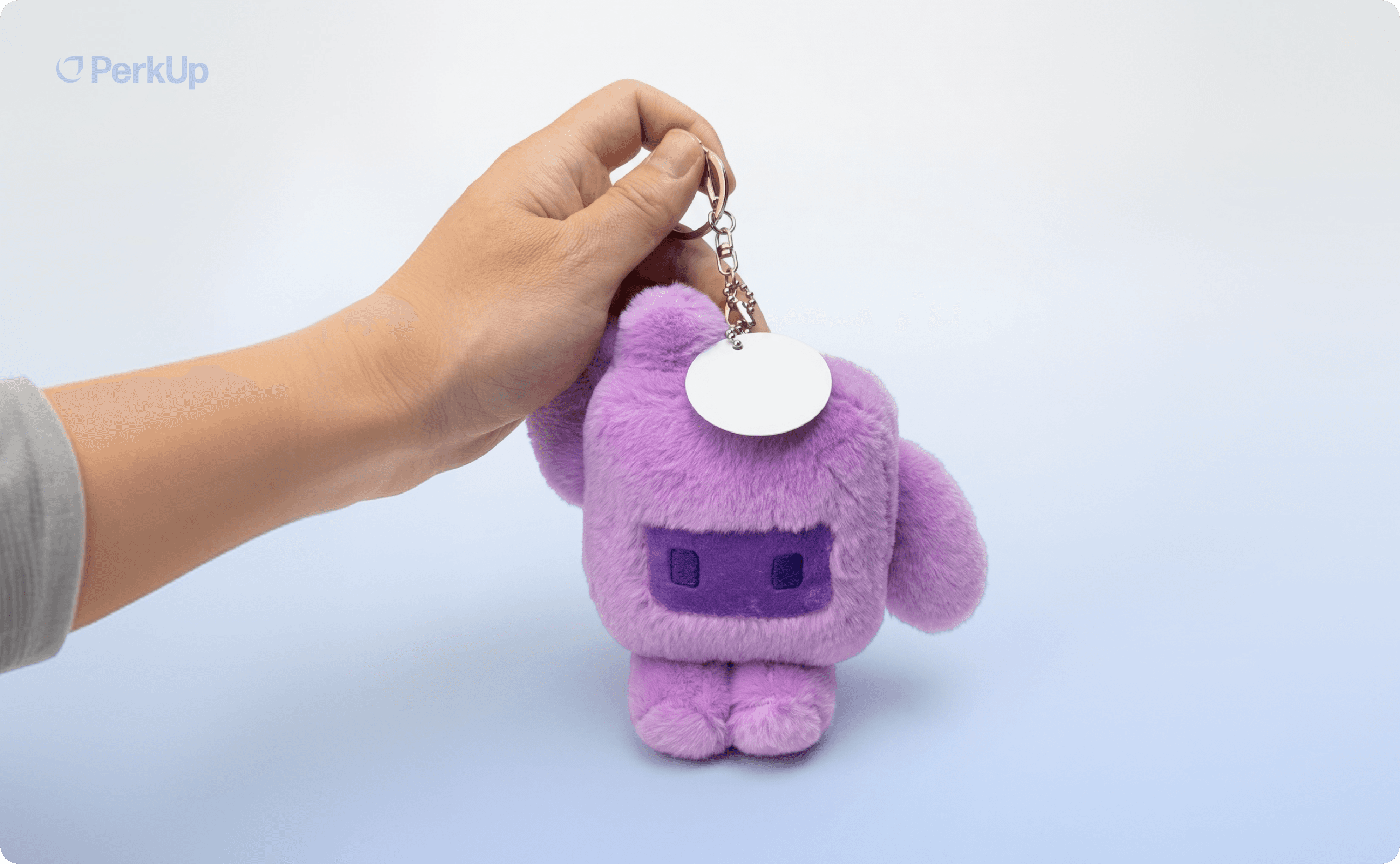
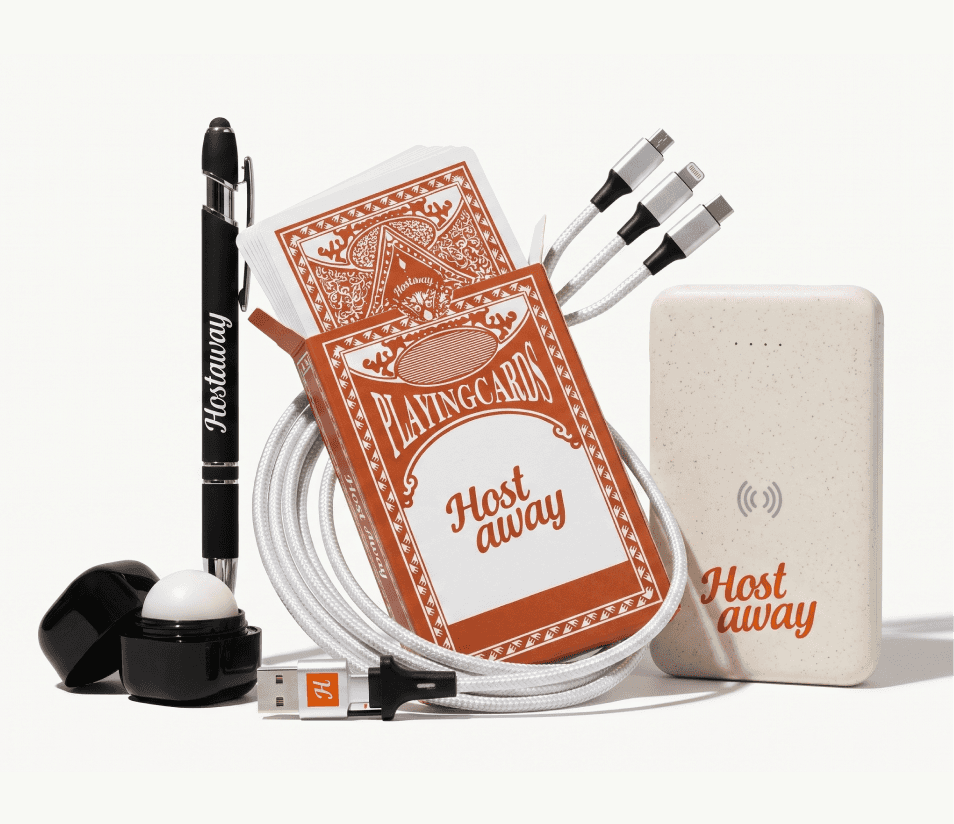
This is where full customization comes in. Not every swag platform gives you this kind of flexibility, but one like PerkUp works directly with factories through its sourcing team, which means you’re not limited to a pre-set catalog of plush templates. If you can dream it up, they can make it work. That goes for custom plushies, keychain plushies, and even entirely new product categories like custom playing cards or branded keychains.
PerkUp’s in-house design team collaborates with you from initial sketches through proofing, making sure the plush accurately reflects your brand identity. They handle the back and forth with manufacturers, so you’re not managing a separate designer, a separate factory, and a separate logistics vendor all at once.
Step 3: Review samples and refine as needed
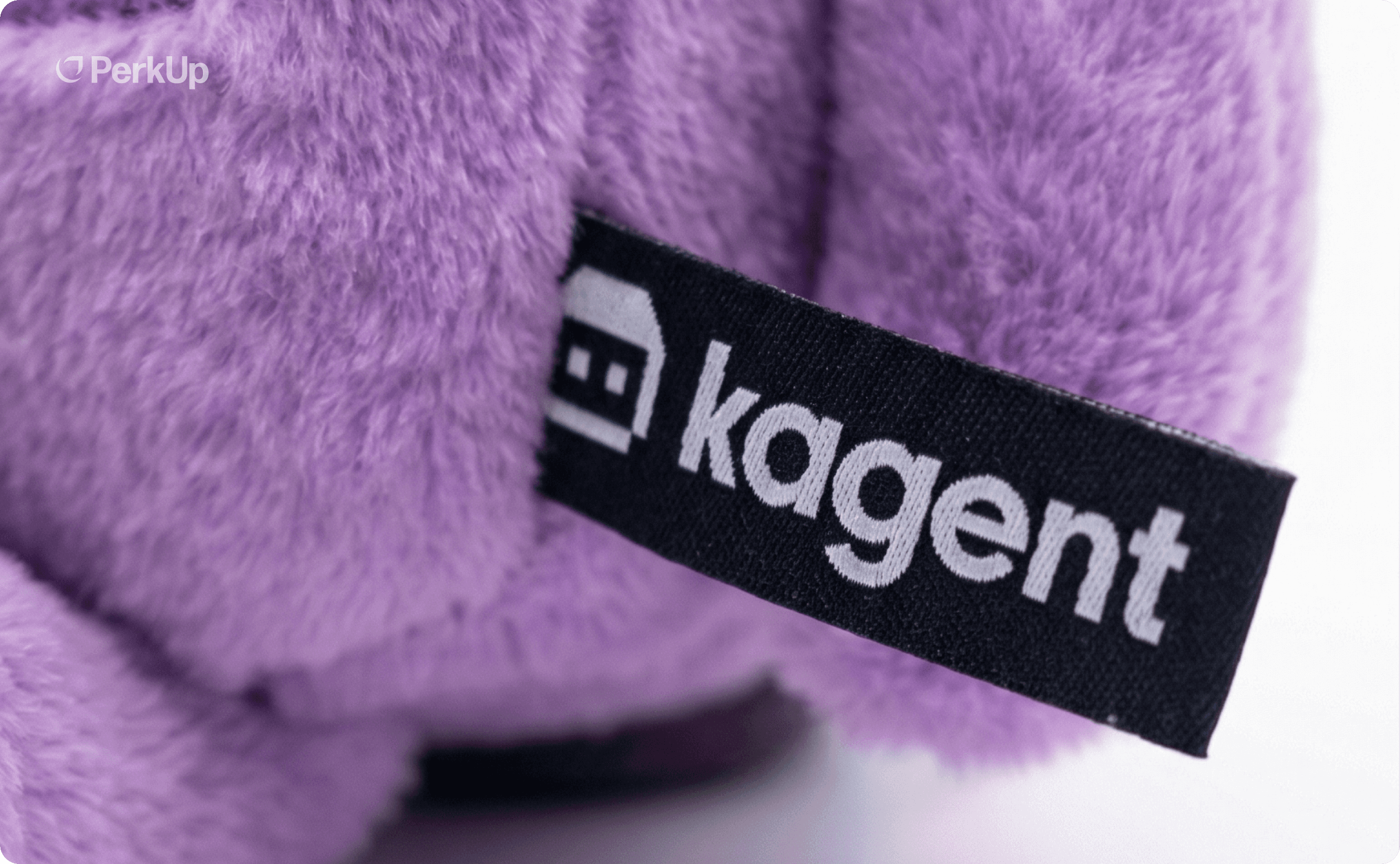
Before going into full production, you’ll want to see and approve a physical sample. This is your opportunity to check fabric quality, stitching, embroidery details, color accuracy, and overall feel. Most manufacturers allow one or two rounds of revisions to get everything dialed in. Don’t rush this step! A higher-quality plush costs a bit more per unit, but the impact per impression is significantly better than flooding an event with items people won’t keep.
Step 4: Choose your sizes based on the use case
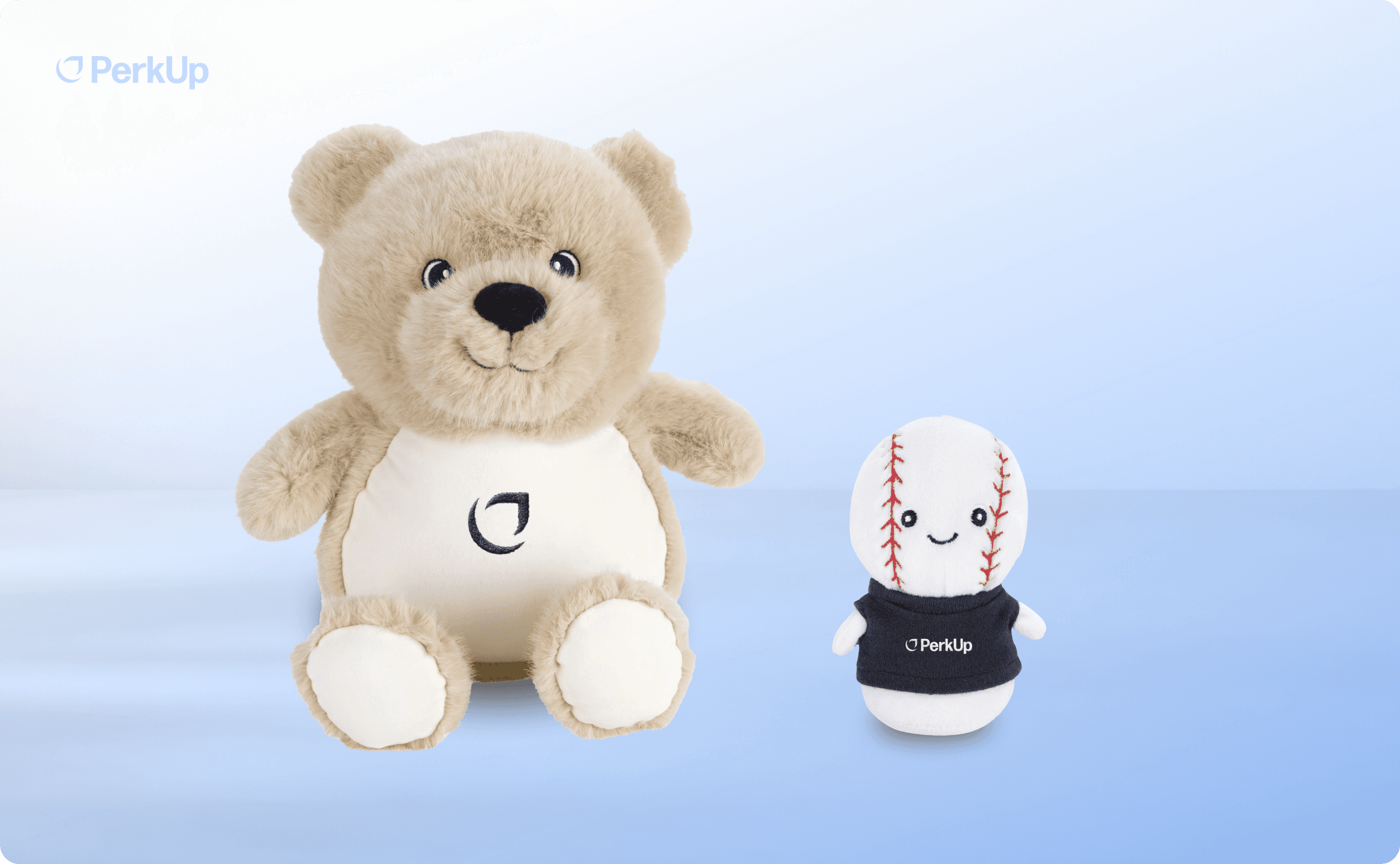
Size matters more than you’d think when it comes to custom plush toys. Keychain-sized plushies (3 to 5 inches) are smart for high-volume giveaways like career fairs and trade shows. Desk-sized plushies (6 to 10 inches) are the sweet spot for most company swag use cases, like onboarding kits and client gifts. Larger plushies (12 inches and up) work well as premium gifts or limited-edition collectibles for product launches. Picking the right size upfront keeps your budget aligned with your goals and makes sure the plush fits the moment.
Step 5: Consider eco-friendly materials
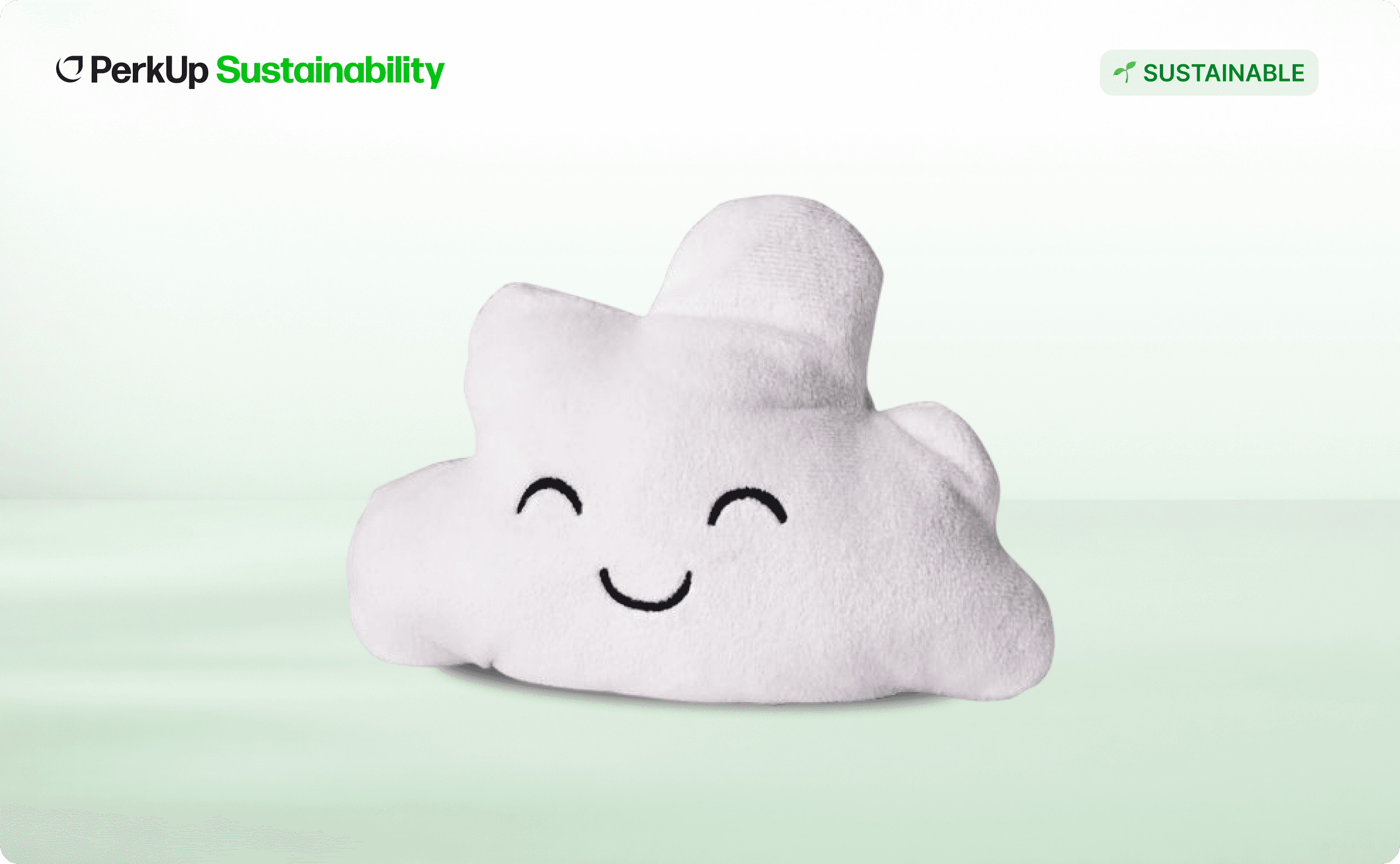
Sustainability matters to a growing number of employees and customers. Plush toys made from recycled materials or sustainably sourced fabrics add another layer of value to your swag, showing your company cares about its environmental footprint.
Step 6: Plan for production, warehousing, and distribution
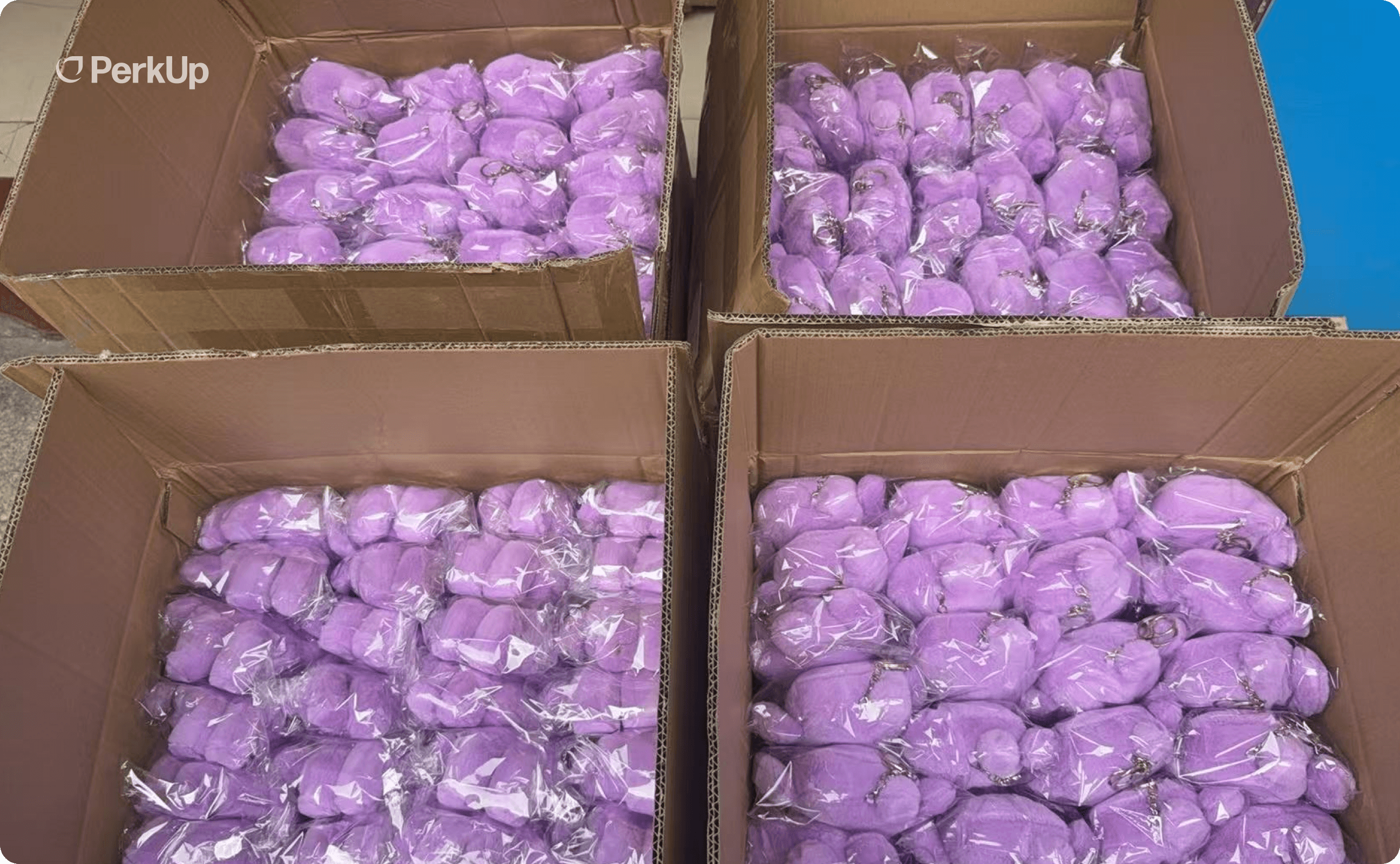
Once the design is approved, production typically takes a few weeks, depending on complexity and order size. If you’re working with a platform like PerkUp, they handle production, warehousing, and global distribution from end to end. Your plushies get stored in warehouses close to your recipients and ship out on your schedule. This is especially valuable if you’re sending custom plushies to teams or clients across multiple countries.
Step 7: Plan for different use cases upfront
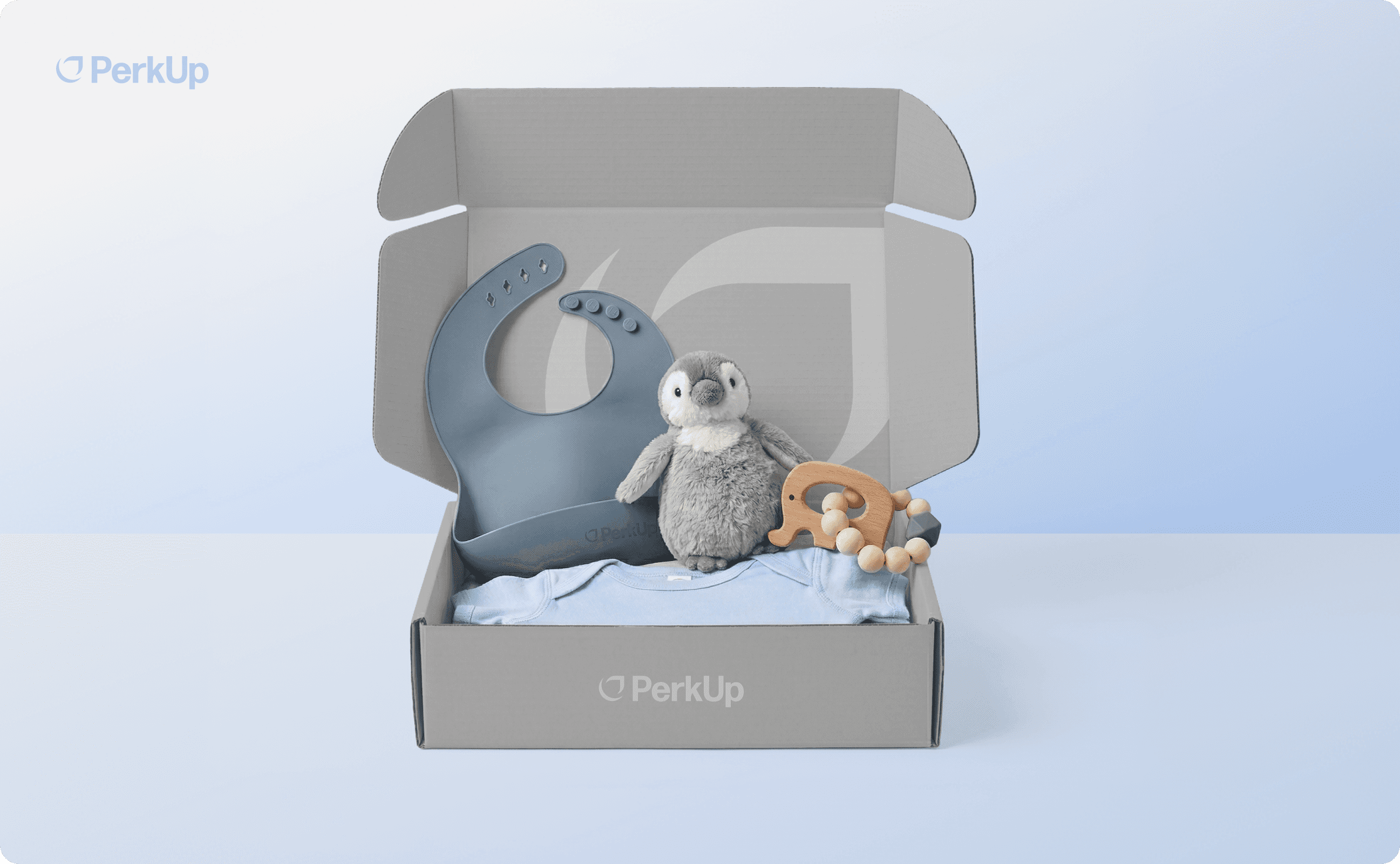
One of the smartest things you can do is think beyond a single event or campaign. If you’re investing in a custom design, consider how it can work across multiple programs. A mascot plush that debuts at a trade show can also show up in onboarding kits, get included in holiday gift boxes, or serve as a reward at internal events. Designing with versatility in mind means you get more mileage out of every plush you produce. It also makes it easier to order in larger quantities, which brings the per-unit cost down and keeps your swag ideas consistent across touchpoints.
PerkUp Can Help You Manage Plushie Swag for Global Teams
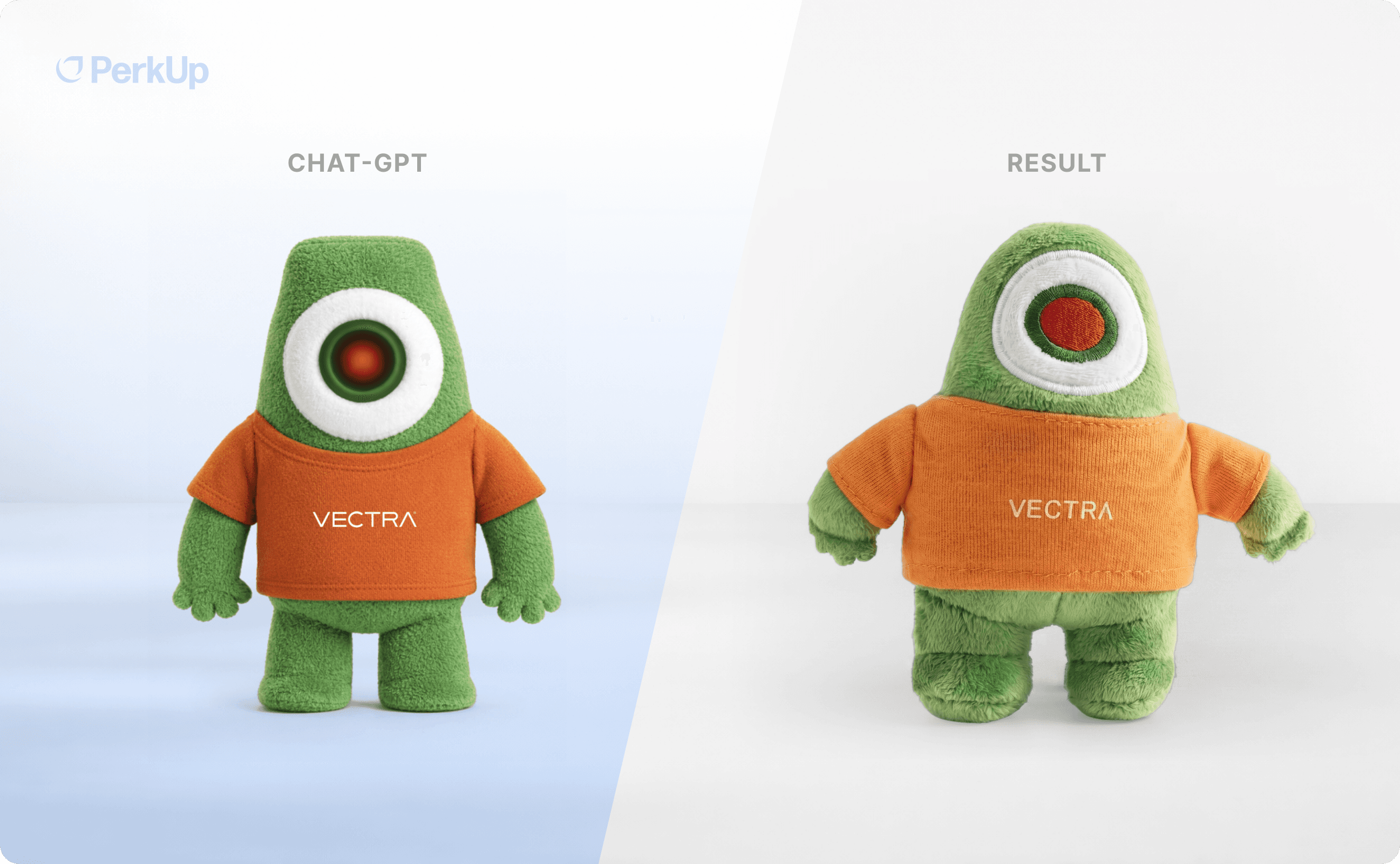
Not every swag platform supports custom plushies as part of its catalog, and even fewer offer the tools to actually create and distribute them at scale. PerkUp is one of the few platforms that does both!
What sets PerkUp apart is the depth of customization it can offer. PerkUp has access to over 2.5 million products through its network, and it has a dedicated sourcing team that works directly with factories. That means you’re not limited to picking from a standard catalog. Companies are getting custom plushies made and even entirely custom items like branded playing cards created from scratch. If you can dream it up, whether that’s a concept sketch, a reference image, or even a screenshot from ChatGPT, PerkUp’s team can turn it into a real product.
Moreover, PerkUp’s in-house design team works directly with you to develop your plush concept from scratch, turning a company mascot into a custom plush mascot or designing something entirely original. From initial sketches through proofing and production, you're collaborating with designers who understand branding.
Once the design is finalized, PerkUp handles the production, warehousing, and distribution across its global network spanning the US, Canada, Mexico, the UK, Europe, India, China, and Australia, so your plushies are stored close to your recipients and ready to ship when you need them.
And if your plushies need to be child-safe or baby-certified, PerkUp manages the certification process for you as well. That includes coordinating the required third-party lab testing (ASTM F963, CPSIA, or CE/EN 71, depending on the market), obtaining the proper certifications, and making sure your plushies are compliant before they ship through its vetted suppliers. This takes a significant compliance burden off your plate, since navigating age-graded safety standards and documentation requirements is a process most companies aren’t set up to handle on their own.
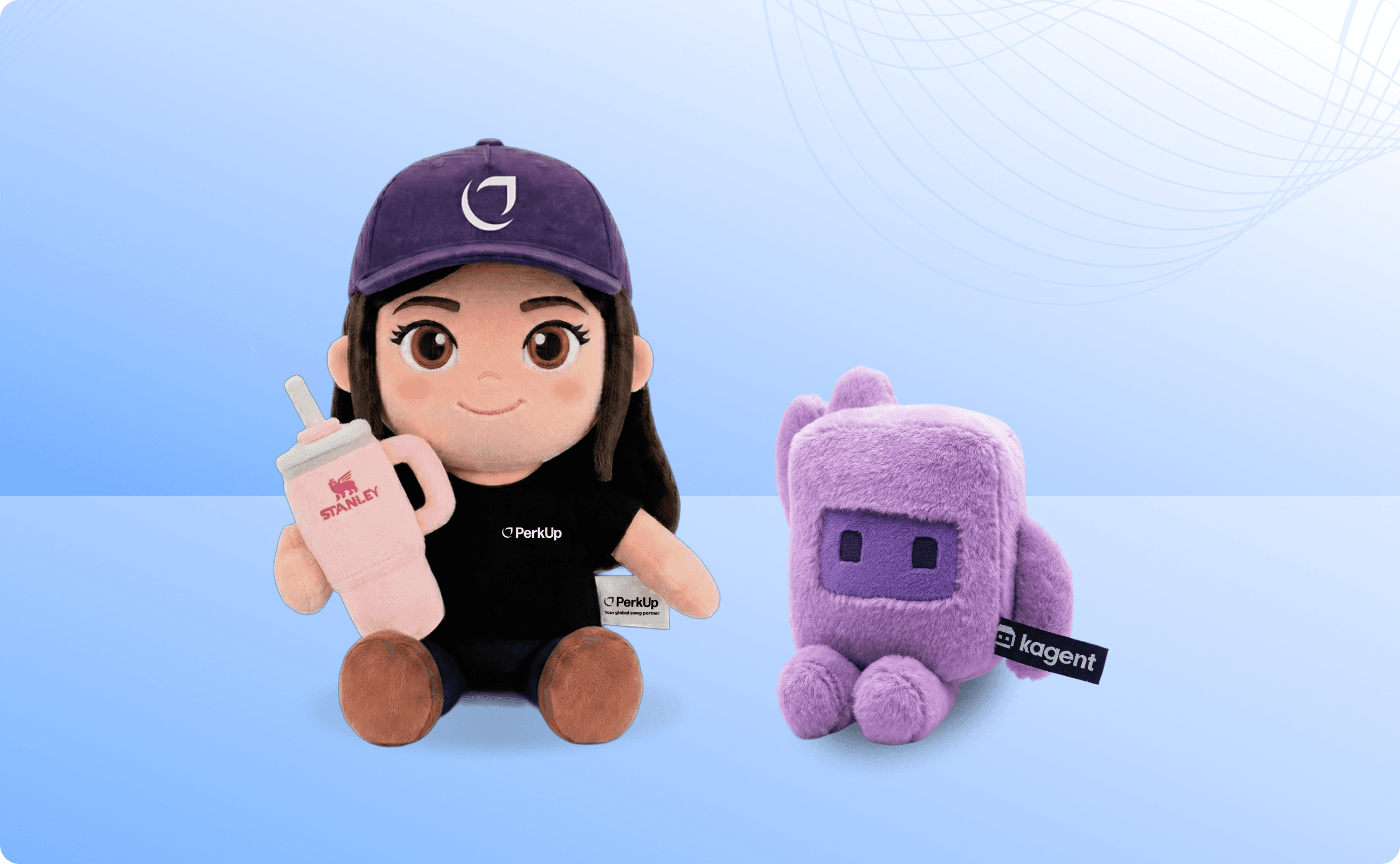
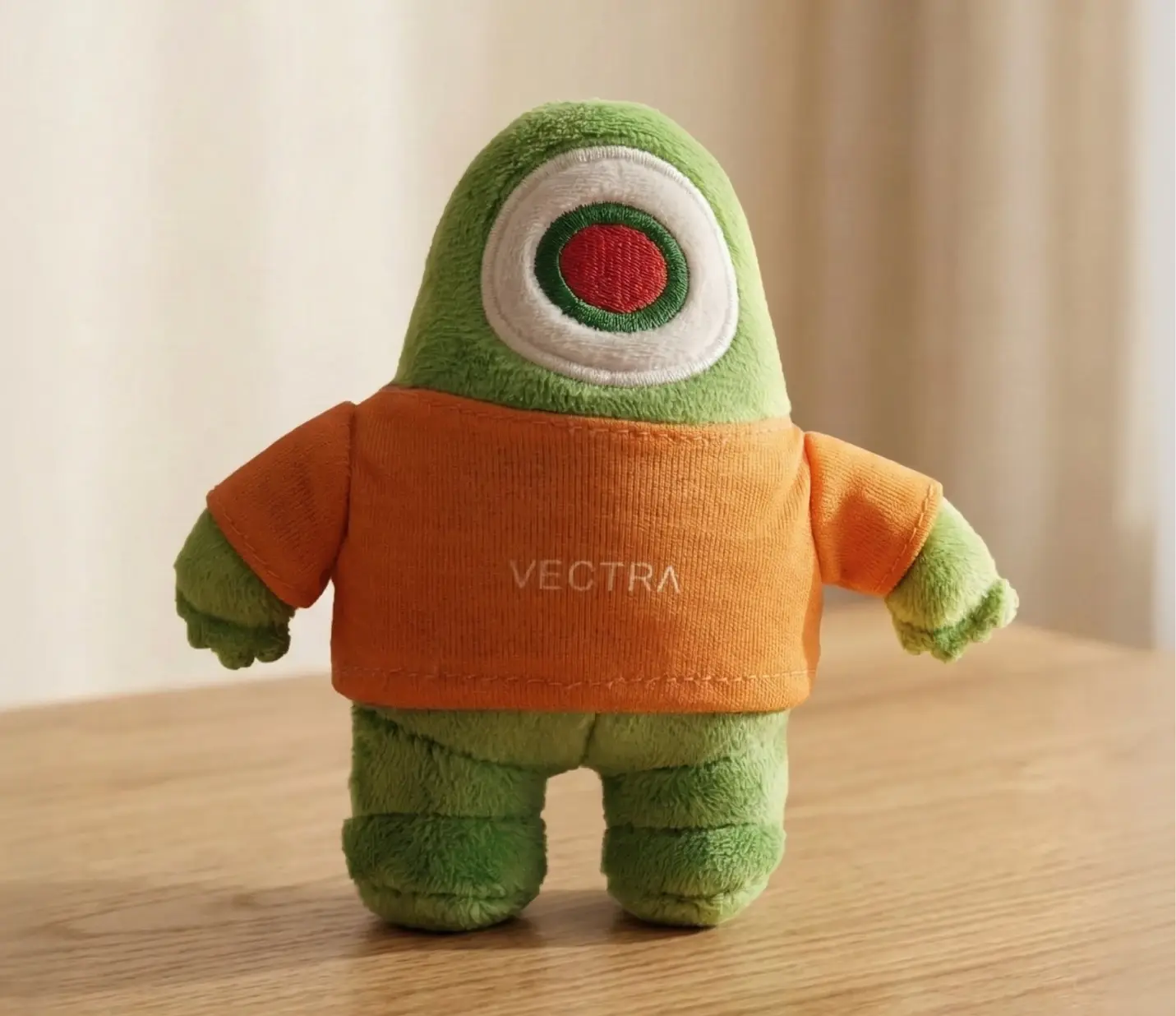
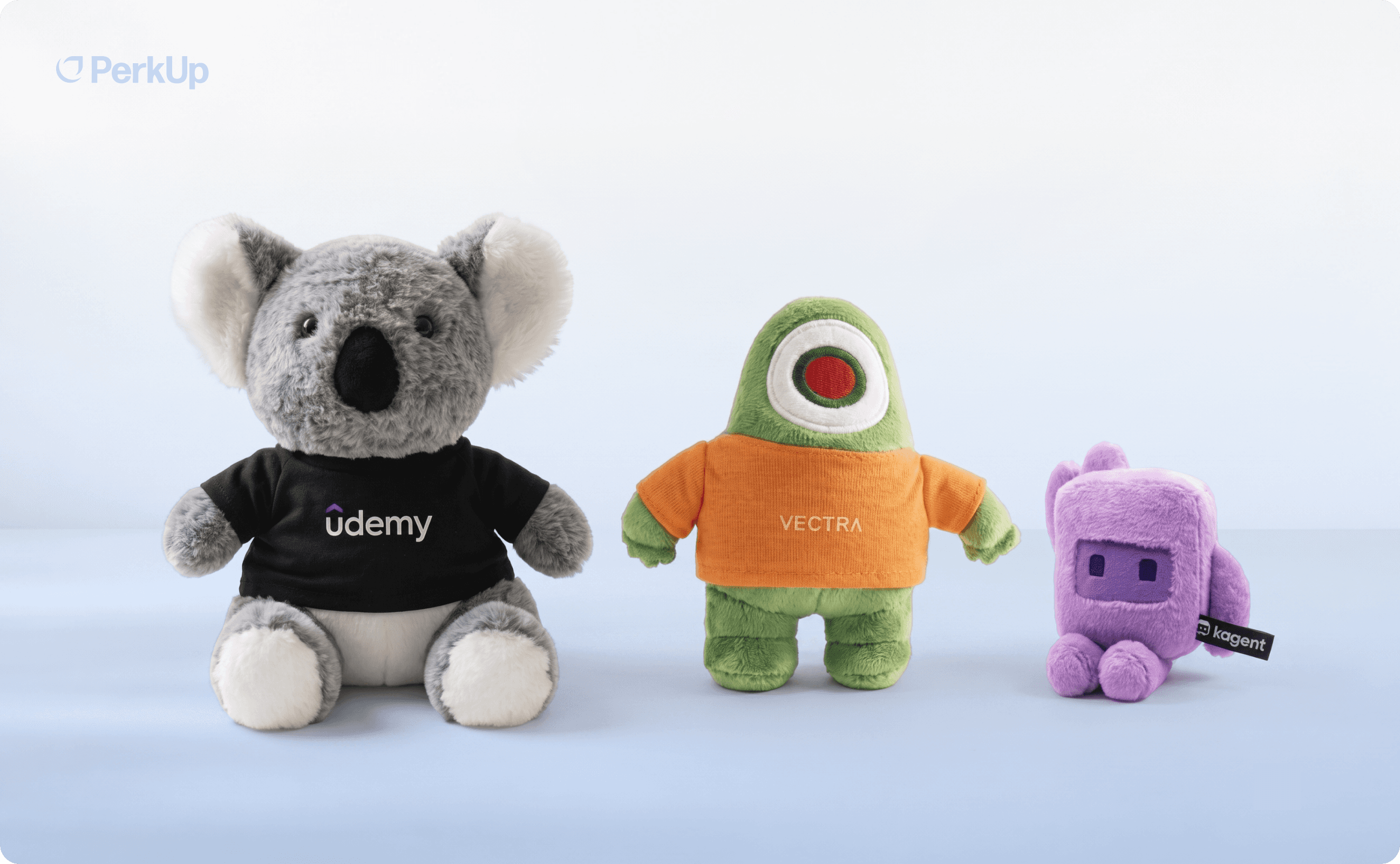
Case in point: PerkUp has already produced custom plushies for companies like Udemy, Vectra AI, and Kagent, handling everything from the design collaboration to production and global fulfillment. These are custom plushies built around each company's brand identity, created in partnership with PerkUp's design team, and distributed through the platform's warehouse network. It's a real example of how the full process, from concept to delivery, can live under one roof without needing to coordinate between a designer, a manufacturer, and a shipping vendor separately.
Choose Custom Plushies for Your Next Swag Giveaway
Custom plushies are a genuinely smart swag choice that combines emotional impact, long-lasting brand visibility, and universal appeal into a single item. From trade show booths and onboarding kits to client gifts and holiday campaigns, plushies bring something to the table that most unique swag items can’t: warmth. And in a world where brands are fighting for attention, that emotional connection makes all the difference.
Ready to add plushies (and more) to your swag lineup? Check out PerkUp’s global catalog and see how easy it can be to send the kind of company swag that people actually want to keep. Book a demo to get started!
Commonly Asked Questions about Custom Plushie Swag
How much do custom plushies typically cost for bulk orders?
Pricing varies depending on design complexity, size, and materials, but most custom plush toys fall in the $3 to $15 per unit range for bulk orders. More intricate designs with embroidery, custom shapes, or premium fabrics will land on the higher end.
Can I order just a few custom plushies, or do I need to commit to a large bulk order?
It depends on the supplier or platform you’re using. Many manufacturers require minimum orders of 50 to 100 units for fully custom stuffed animals.
Do I need to provide my own artwork, or can I get help designing custom plushies?
You can provide your concept, but at the same time, you don’t need to come in with a finished design, either. Swag platforms like PerkUp offer in-house design support to help bring your plushie concept to life. PerkUp, for example, includes a dedicated design team, so you can collaborate on everything from initial sketches to final proofing.
Can custom plushies be shipped internationally?
Absolutely! That said, international shipping can get complicated quickly if you’re managing it on your own. Customs regulations, duties, and delivery times vary by country. PerkUp simplifies this by shipping DDP (Delivered Duty Paid) whenever possible and leveraging its global warehouse network to fulfill orders locally.
Can I offer plushies alongside other items in the same swag store?
Of course! That’s actually the approach most companies take. Platforms like PerkUp let you combine different types of swag in a single store, so you can stock bulk custom plushies alongside other branded items like apparel, drinkware, or accessories. This way, recipients get variety while you maintain a consistent brand experience. You can also tailor which items are visible by team, department, or region, so the right people see the right swag without cluttering the store for everyone else.
Do custom plushies need safety certifications if they’re intended for children?
Yes, and the requirements depend on the age group. Plushies for children 3 to 12 need to pass ASTM F963 testing (covering mechanical, chemical, and flammability hazards) and be certified with a Children’s Product Certificate. Baby-safe plushies (under 3) face stricter rules, including the small parts ban under 16 CFR Part 1501 and more aggressive use-and-abuse testing. Lab testing costs $300 to $800 per design, with baby-safe certifications on the higher end. Keep in mind that changing materials or factories after initial certification requires a new round of testing. For purely adult promotional plushies, like desk swag, these toy-specific rules generally don’t apply.