India is one of the top destinations for US and European companies building global teams. The talent pool is enormous, which means more and more companies are hiring in cities like Bengaluru, Hyderabad, Pune, and Mumbai every year. But as teams grow across the country, you might begin to ask yourself: how do I actually get swag there?
That’s a question we will answer in this guide, where we break down everything you need to know about shipping swag to India in 2026, from customs rules and duty calculations to local production, timelines, and the ways a swag platform can handle it all for you.
Interesting Facts about India
But before we get into the logistics of shipping swag to India, it helps to understand why so many companies are building teams there in the first place. Here are a few facts worth knowing:
India has 44 UNESCO World Heritage Sites, ranking sixth globally, with landmarks like the Taj Mahal, the Ajanta Caves, and the Western Ghats.
It’s the world’s most populous country, with over 1.48 billion people as of 2026, accounting for roughly 17.79% of the global population.
India is the sixth-largest economy in the world by nominal GDP ($4.15 trillion in 2026) and the third-largest by purchasing power parity. The IMF projects GDP growth at around 6.5% in 2026, making it the fastest-growing major economy.
The country recognizes 22 official languages under the Eighth Schedule of its Constitution, with Hindi and English serving as the two languages of central government communication. There is no single national language.
Diwali, the Festival of Lights, is one of the most significant gifting occasions in Indian business culture. It’s traditionally associated with the start of a new financial year in many Indian business communities, which makes it a natural peak season for corporate recognition and gifting.
The takeaway from all these facts? India is massive, diverse, economically vibrant, and a magnet for global companies seeking to tap world-class tech talent. And when your team begins to expand there, swag is one of the simplest ways to make India-based employees feel like part of the same company culture as everyone else.
But sending swag to India can be challenging. In the next section, we’ll discuss exactly why.
That’s exactly why more companies are turning to swag platforms that handle international shipping to India for them. But even if you opt for this route, you still need to understand the rules, because India’s customs system is one of the strictest in the world, and nothing about shipping swag to India looks like shipping to Canada, the UK, or Mexico.
Why is shipping swag to India so tricky?
The short answer is that India treats every international inbound package as a potential commercial import, and its rules reflect that.
Unlike most major economies, India has no de minimis threshold for imports, meaning even a single hoodie in a padded mailer is subject to duty and tax on arrival. Person-to-person gifts receive a small exemption (typically up to ₹5,000 in declared value), but that rule doesn’t cleanly apply to company-to-employee shipments, which customs often classifies as commercial.
Aside from that, India’s customs regulations are also extensive and often non-transparent. In some cases, packages can sit in customs for days or weeks. Items that clear without issue through one port can get flagged at another. And some categories (loose lithium batteries, used electronics, items without the right paperwork) simply shouldn’t be shipped in at all.
Because of all of these, teams shipping successfully into India have stopped treating this as an “international shipping” problem and started treating it as a “where should each item be produced” problem. That shift in mindset changes everything about how a company can successfully build a swag program for its team in India.
What are the customs and import rules of India you need to know about?
You need to know three things about India’s customs.
Basic Customs Duty (BCD), which is applied to the assessable value of imported goods based on their HSN code and varies by category.
Social Welfare Surcharge, typically 10% of the BCD amount
Integrated Goods and Services Tax (IGST), which is usually 18% but can reach 28% for certain categories.
India also uses the CIF (Cost, Insurance, Freight) valuation method, so your shipping and insurance costs are included in the customs value before duty is calculated.
For a quick benchmark: the standard combined tax rate for goods imported into India is around 28%, and the average customs duty excluding agricultural products sits near 13.6%. That’s before any product-specific duties or anti-dumping measures apply.
Several categories carry meaningful restrictions on top of that:
Lithium batteries are restricted or banned in loose and bulk shipments
Mobile phones must have a clearly visible IMEI number
Used electronics require a No Objection Certificate from India’s Ministry of Environment
Used clothing requires a Special Import License from the Director General of Foreign Trade
Gold, jewelry, and currency cannot be sent through ordinary courier routes
That said, if you have corporate gifting India programs, the categories to watch most carefully are drinkware (especially insulated or electronic), tech accessories, and anything battery-powered. These are, unfortunately, exactly the items that most new hire kit programs love to include.
How long does it actually take to ship swag to India?
Say, you’ve cleared all the customs and import rules to get your swag items into India. Great! The natural next step to think about is the shipping.
Typically, standard international shipping from a US or EU warehouse to a major Indian metro takes 5 to 10 business days in transit, plus customs clearance. Clearance itself can add anywhere from 2 to 10 additional business days, depending on the port, the documentation, and whether any items trigger additional review.
For bulk swag orders that need to be produced before they ship, the timeline stretches. Production runs about 3 weeks, kitting another week, and customer approval another week, for a total of 5 weeks before anything leaves the warehouse. Add international transit and customs clearance, and you’re realistically looking at 7 to 8 weeks door-to-door when bulk swag is produced overseas and shipped into India.
On Demand swag fulfillment from an international warehouse typically runs around 2 weeks total, but that assumes smooth customs clearance, which, again, as we mentioned, isn’t always guaranteed. This is the timeline that can catch you off guard: if your new hire starts on the 1st and you kick off the order when they sign the offer letter three weeks prior, you’re cutting it close.
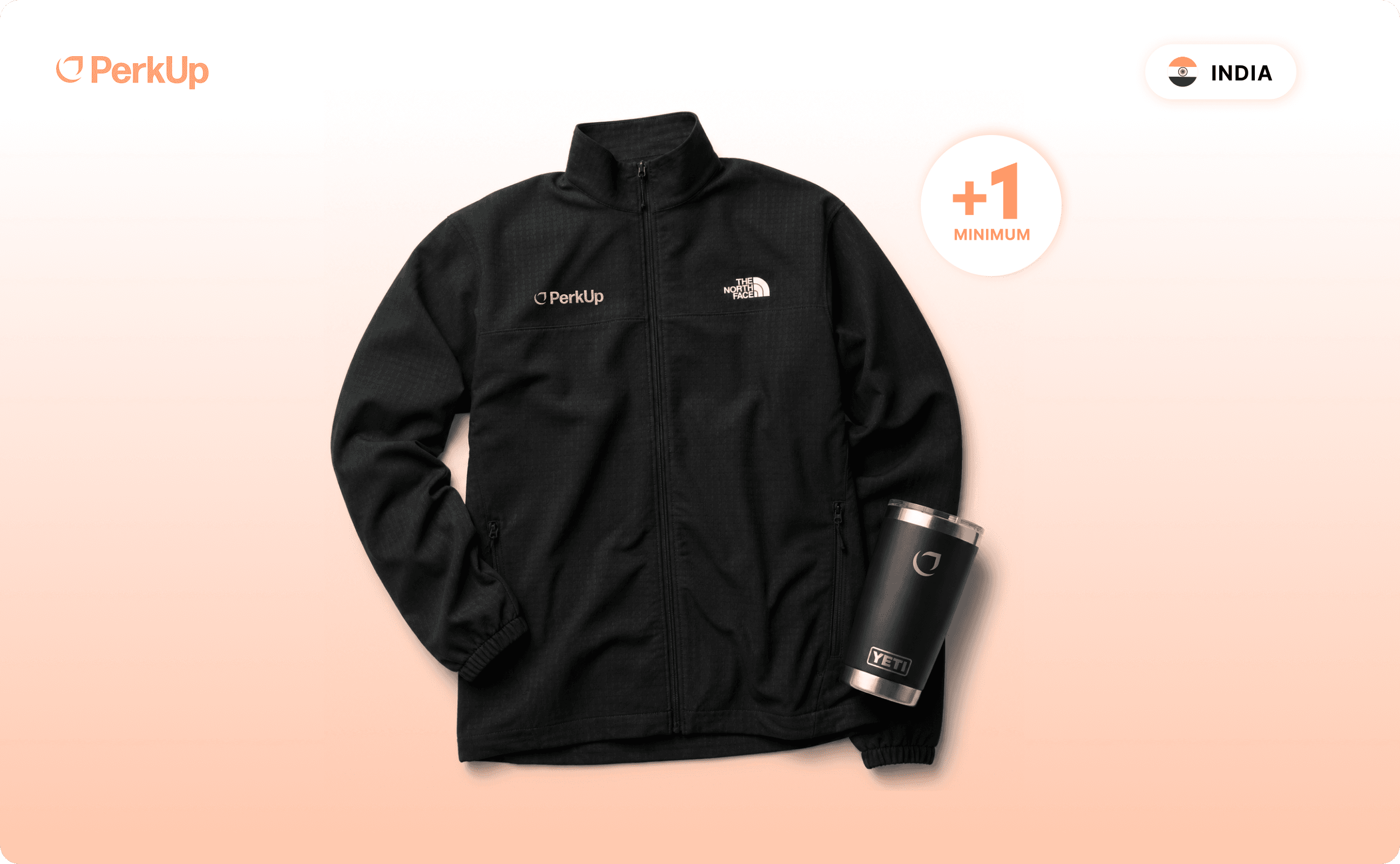
Now, let’s say your swag items are produced locally in India, then the math changes—dramatically. On Demand and bulk swag items sourced from a supplier within the country can be produced and shipped domestically in a fraction of the time, with no customs risk at all.













Why is local production the smarter play for India?
Local production in India solves the three biggest problems that you encounter when shipping swag to India through cross-border shipments: 1) it eliminates customs risk; 2) it compresses the timeline; and 3) it usually costs less per unit once duties and international shipping are factored in. Let’s discuss each in detail.
It eliminates customs risk entirely
A swag item produced inside India never has to cross a customs border. For the items that do need to be imported, PerkUp works directly with an India-based partner that handles the end-to-end import process, including approvals, documentation, and clearance. You don’t need to file paperwork or coordinate with customs brokers yourself, as PerkUp and its partners will handle it for you.
It compresses the timeline
Cross-border bulk swag produced overseas can run 7 to 8 weeks door-to-door once production, kitting, customer approval, international transit, and customs clearance are all added up. That timeline doesn’t apply when the production stays in-country. On Demand and bulk swag items produced locally in India can be turned around in a fraction of the time, and there’s no 2-to-10 business day customs buffer to plan around.
It usually costs less per unit
Once Basic Customs Duty, Social Welfare Surcharge, IGST, and CIF-based valuation are factored in, cross-border unit economics get expensive fast. Local production frequently comes in cheaper before you even account for international shipping and insurance. Drinkware is a textbook example: water bottles and tumblers are consistently cheaper to produce in India than to ship in from the US, and drinkware is also one of the most commonly flagged categories at Indian customs.
In addition, India has a competitive swag manufacturing ecosystem. It has strong bulk and On Demand swag suppliers that can offer apparel, drinkware, bags, stationery, and most standard new hire kit categories.
In terms of new hire swag, the most effective new hire kit programs for India-based teams actually follow a hybrid model: import the swag items that are genuinely hard to source locally (a specific co-branded premium product, say, tied to a global campaign), and produce everything else in-country. That way, the swag kit still feels cohesive and on-brand, but you’re not betting the entire shipment on a clean customs run.
What swag items actually land well with India-based recipients?
Say you’ve decided to opt for local production for your swag in India. The next step is to pick the swag items that your recipients in the country will want to use.
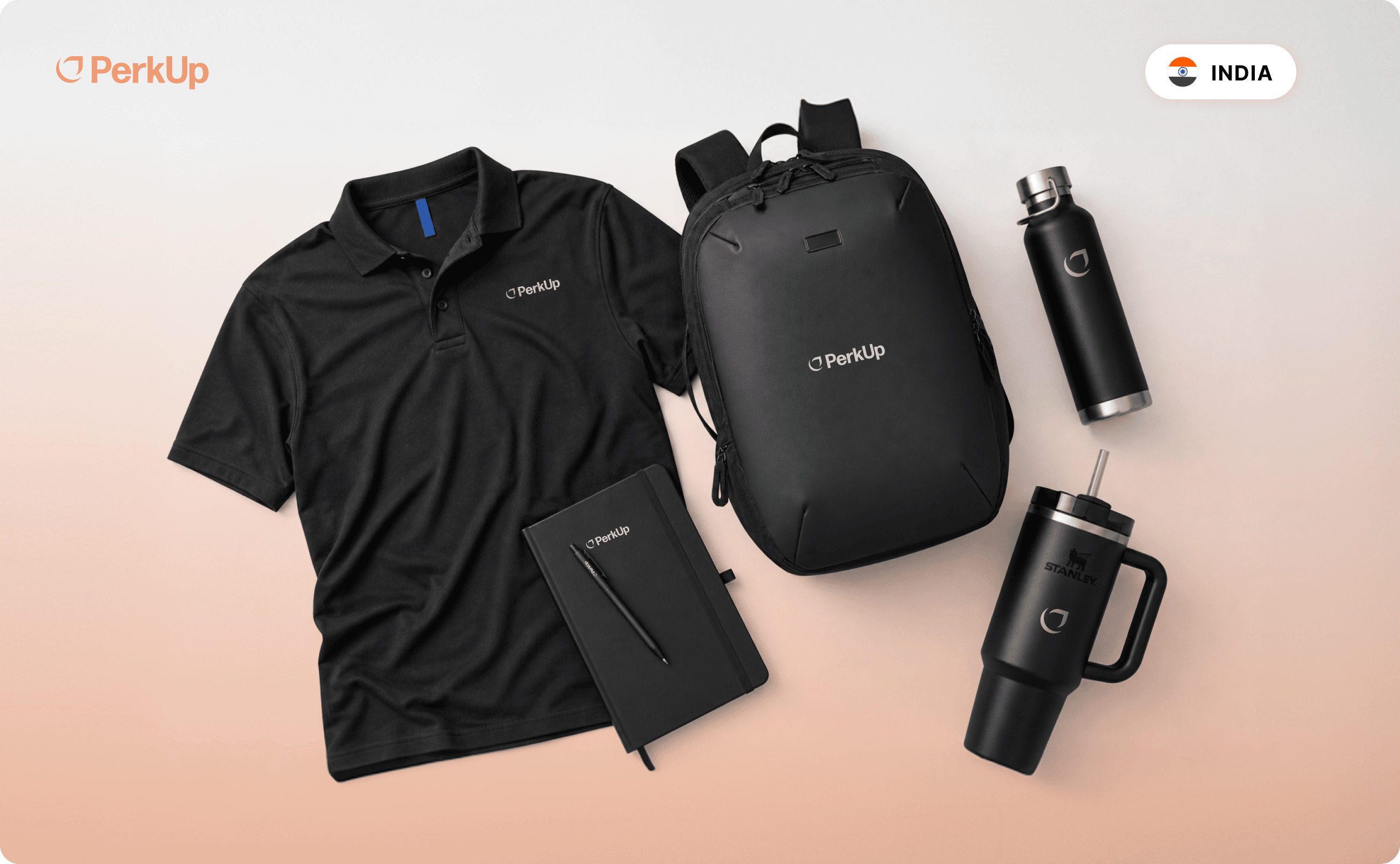
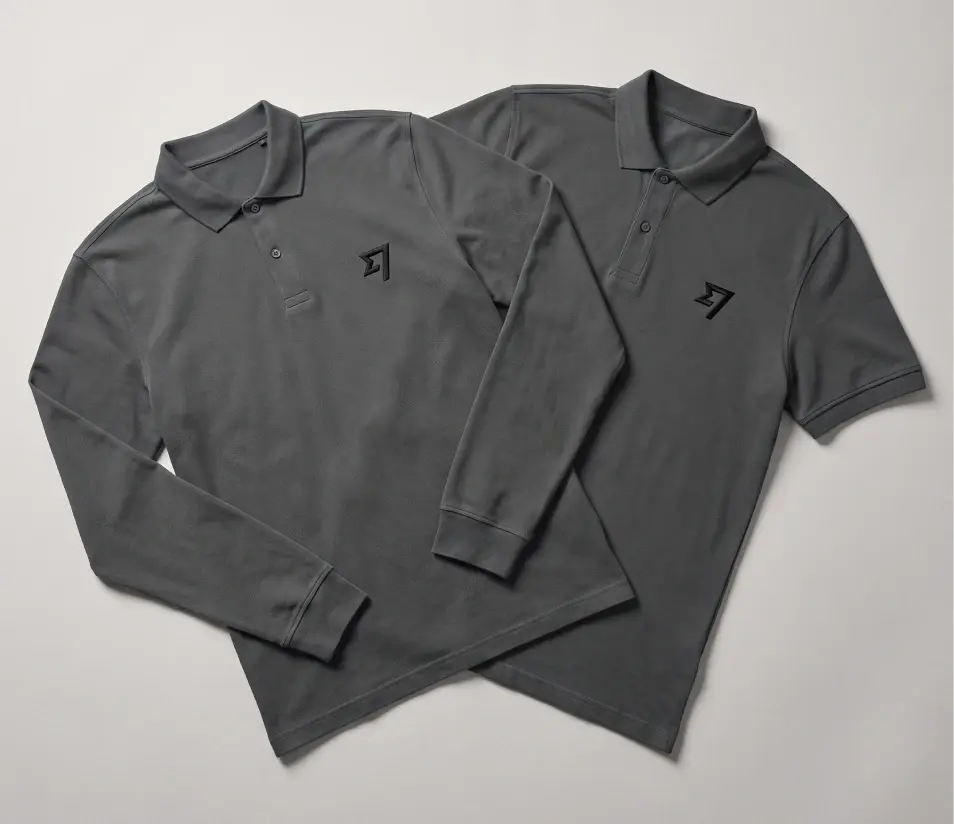
Polo t-shirts are the standout apparel choice. They consistently outperform jackets, hoodies, and crew-neck tees among India-based employees. Business casual polos with subtle embroidered branding are the safest default.
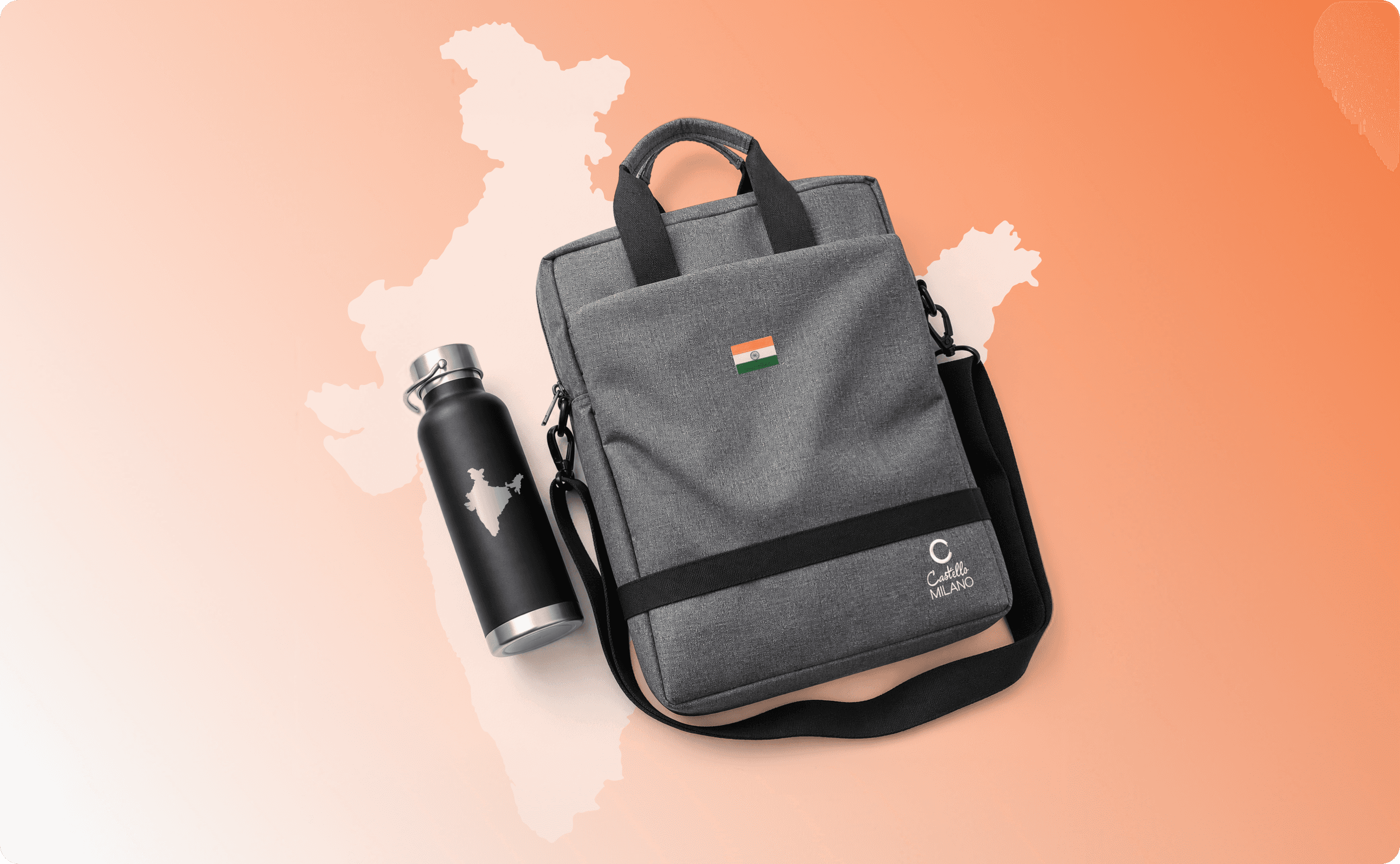
Messenger bags and laptop backpacks perform well for commuter-heavy hubs like Bengaluru, Mumbai, and Hyderabad.
Notebooks and quality pens remain staples, especially for employees who routinely attend hybrid meetings with global counterparts.
Culturally relevant items add meaning. Copper items like copper drinkware tie into traditional Indian wellness culture. Diwali-themed kits in late October and early November will also be appreciated during the celebration.
Drinkware brands like Tyeso and Stanley are in demand. Tyeso in particular makes a strong case as a premium alternative when imported name-brand drinkware runs into customs delays.
What are the most common mistakes when shipping swag to India?
Assuming the de minimis exemption applies: It doesn’t. Every commercial inbound package to India is subject to duty and tax.
Declaring shipments as personal gifts when they’re clearly business-to-business: Customs officers are familiar with this pattern, and misdeclaration can trigger fines or seizure.
Shipping items with lithium batteries across the border: Wireless earbuds, power banks, and battery-operated gadgets belong in the “produce locally” category.
Centralizing all production overseas: A single US warehouse shipping the entire global kit to 12 countries is a recipe for lost time on India-bound packages.
Underestimating customs clearance time: As mentioned, make sure to factor in 2 to 10 extra business days, and more during national holidays and major festival periods.
Sending one-size-fits-all apparel to every market: India has specific preferences (polos over hoodies, for instance) that are worth respecting in a new hire kit design.
How does PerkUp handle shipping swag to India?
By now, you probably know more about shipping swag to India than when you began reading this blog. While that equips you with more knowledge and information about how you can go about your swag campaign, it can also become overwhelming real quick, especially if you’re also handling other projects aside from your team’s swag campaign. In that case, working with a global swag platform like PerkUp becomes your best bet for a successful swag program.
Here are a few reasons why:
Warehouses and supplier partnerships in India
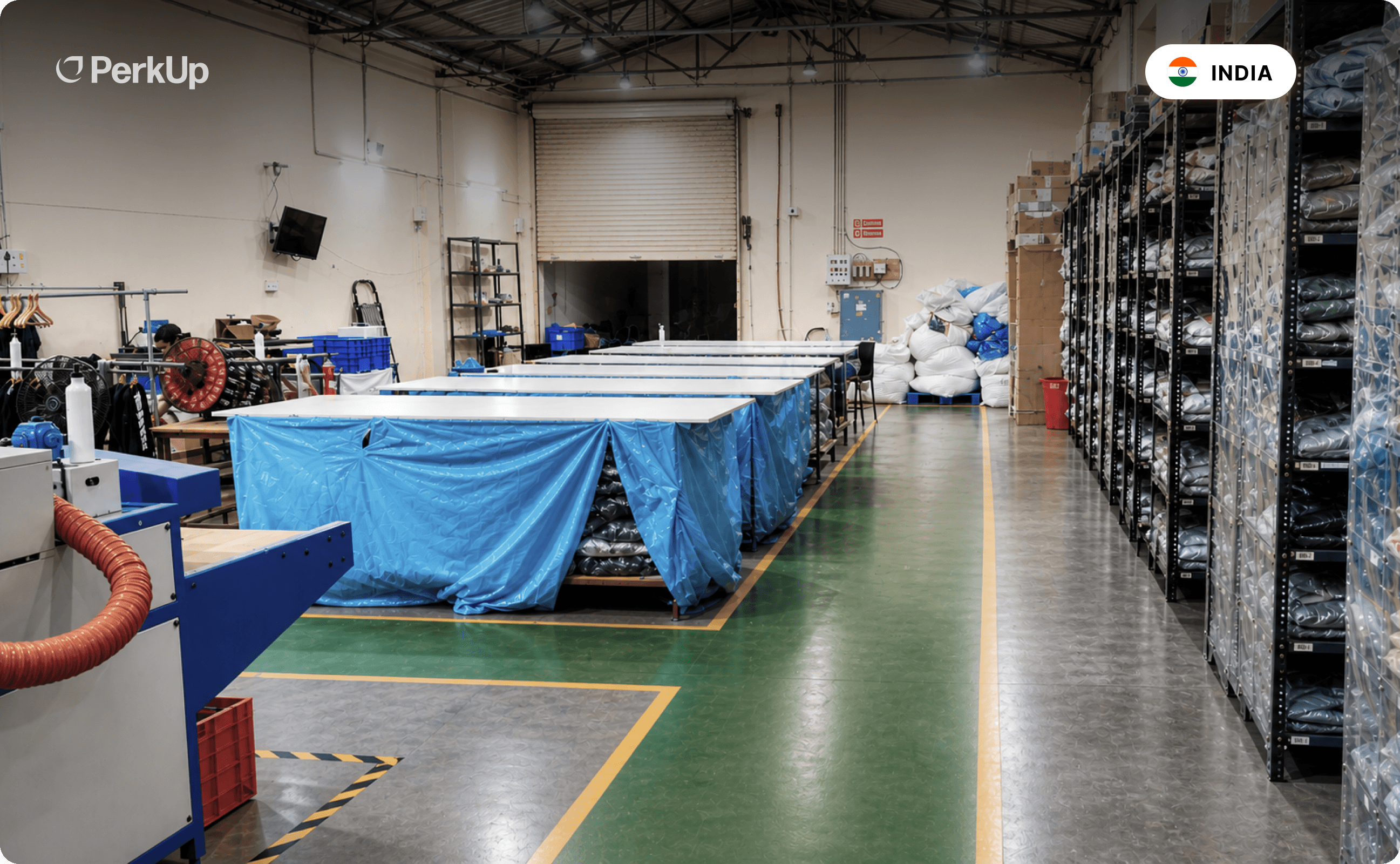
PerkUp operates a global network of warehouses across the US, Canada, Mexico, the UK, Europe, India, China, and Australia, plus direct On Demand and bulk supplier partnerships inside India itself. That in-country infrastructure is what makes local production viable at scale, covering apparel, drinkware, bags, stationery, and most standard new hire kit categories. PerkUp’s warehouse partners on the ground also advise on what can and can’t be imported before an order is even placed, so real customs issues get caught in the planning stage rather than after a shipment is already stuck at the border.
A lower carbon footprint through local production
Local production also largely contributes to sustainability efforts. PerkUp’s local fulfillment network cuts transportation-related CO₂ emissions by up to 95% compared to long-haul cross-border shipping, all the while reducing packaging waste and the overall environmental footprint of each shipment. That impact is reinforced by PerkUp’s membership in Pledge 1% and a partnership with Stripe Climate. For companies with their own ESG commitments, the sustainability story of producing in-country matches the sustainability story they’re already telling internally.
Hybrid sourcing between imported and local production
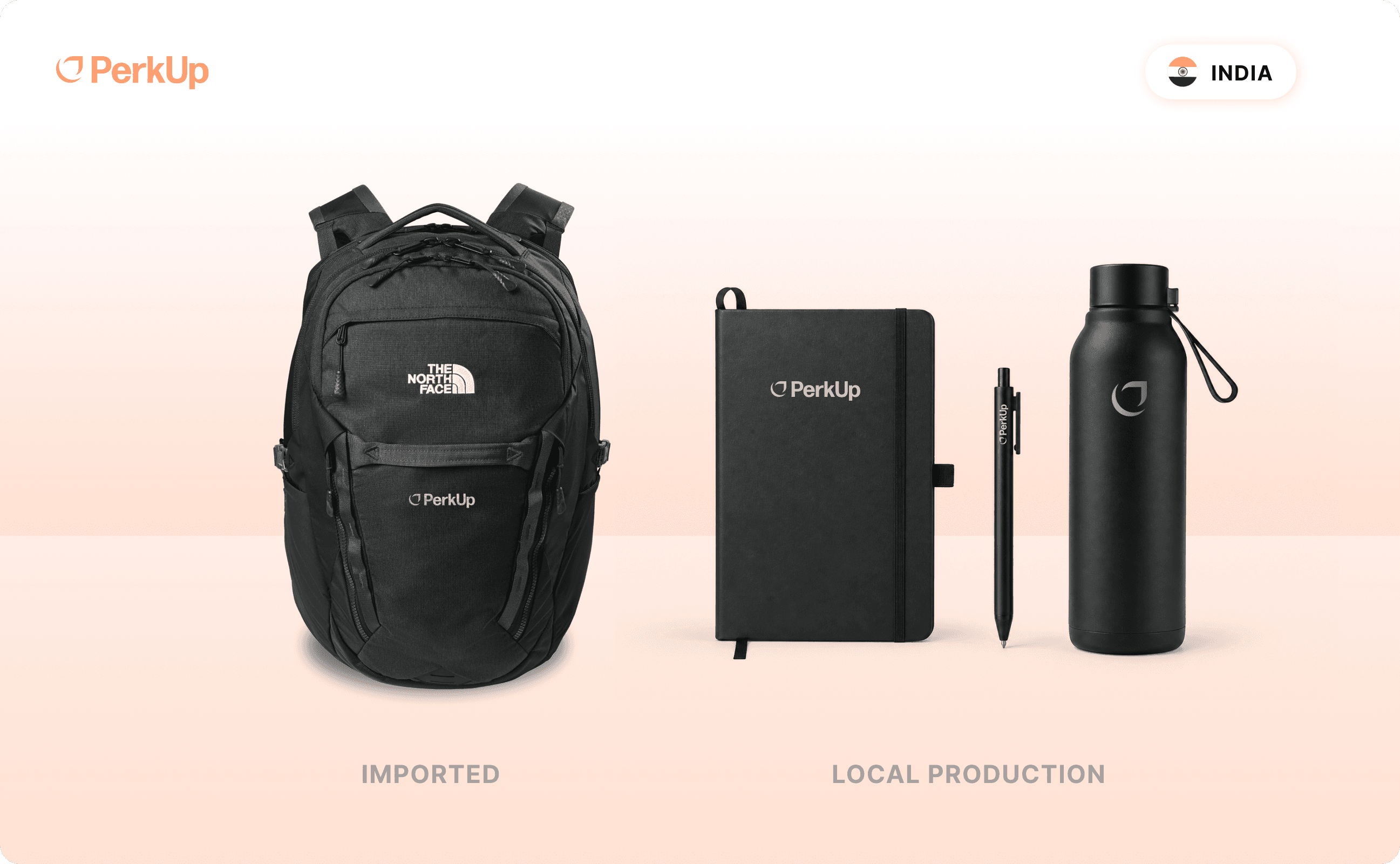
PerkUp treats every Indian order as a mix-and-match exercise rather than a single shipping decision. Backpacks and co-branded premium swag items can be shipped in from overseas, where it makes sense for kit cohesion. Drinkware and apparel are produced locally to sidestep customs risk entirely. The result is a kit that still feels unified and on-brand, without betting the whole shipment on a clean customs run.
Delivery duty paid shipping
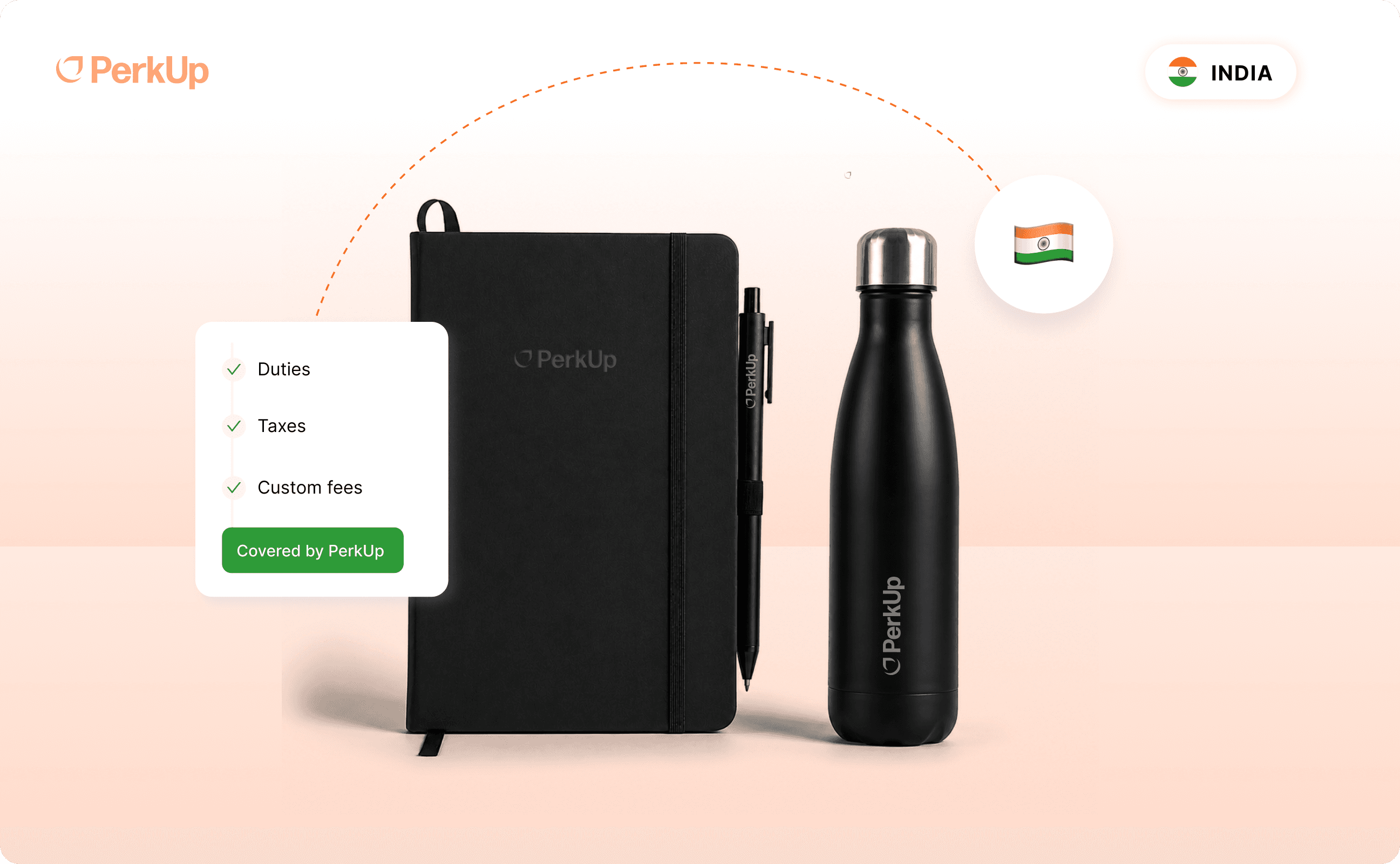
For the items that do cross a border, PerkUp ships delivered duty paid (DDP) wherever possible, meaning the platform covers 100% of the customs fees. Duties, customs clearance, and applicable taxes are prepaid and included in the order cost rather than handed off to your recipient. And in the rare cases where unexpected customs or duty fees do come up in transit, PerkUp covers 100% of them, no exceptions!
Curated India swag catalog
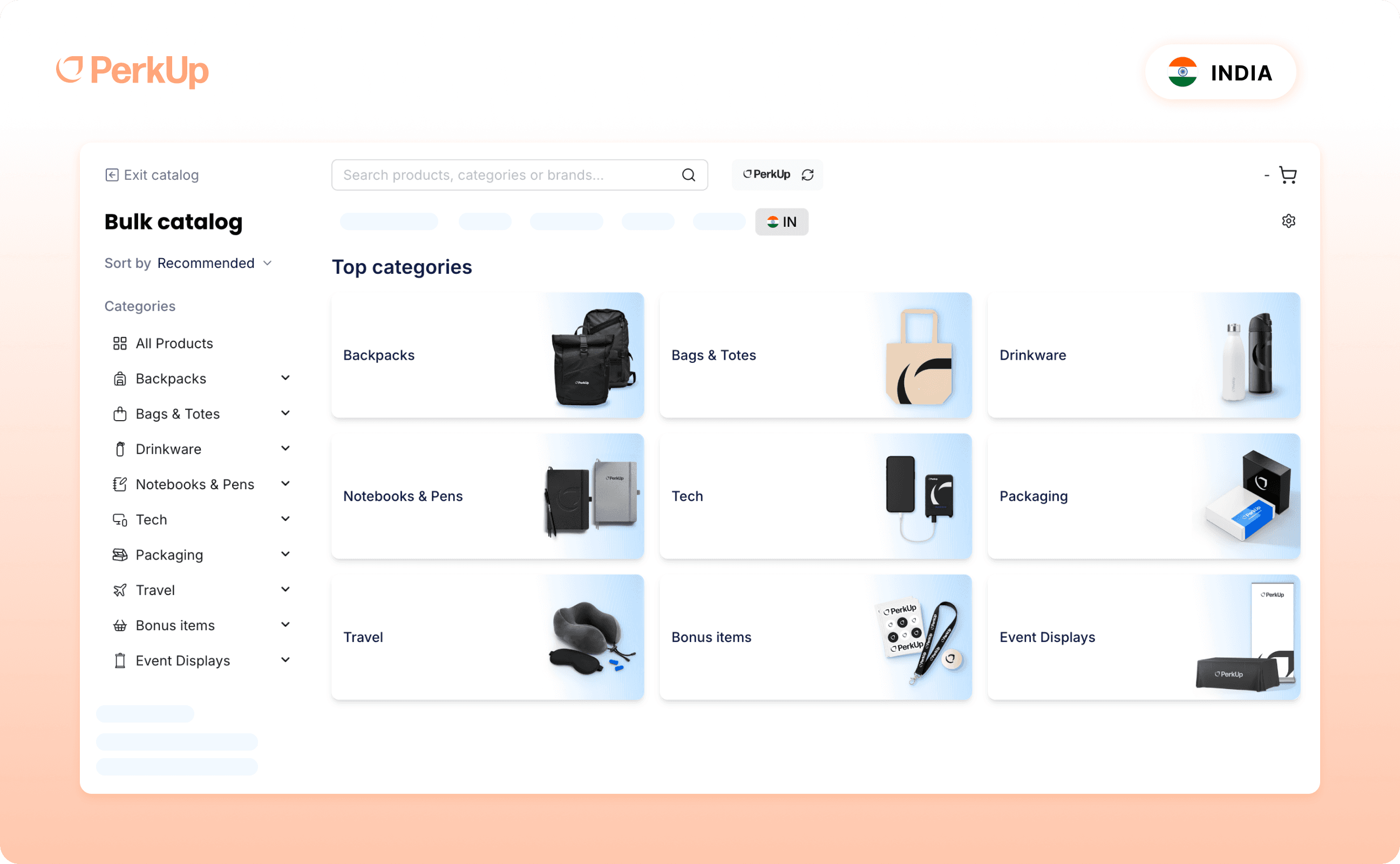
PerkUp also has its own India swag catalog, where you can browse a variety of items that are specifically curated for your recipients in the country. Backpacks, drinkware, and many other swag items are available in this regional catalog, offering you and your recipients products that are culturally relevant and produced domestically.
What does shipping swag to India actually look like in practice with PerkUp?
The clearest way to understand international shipping to India is to look at how experienced global teams are actually structuring their India orders with PerkUp.
Wise: new hire kits
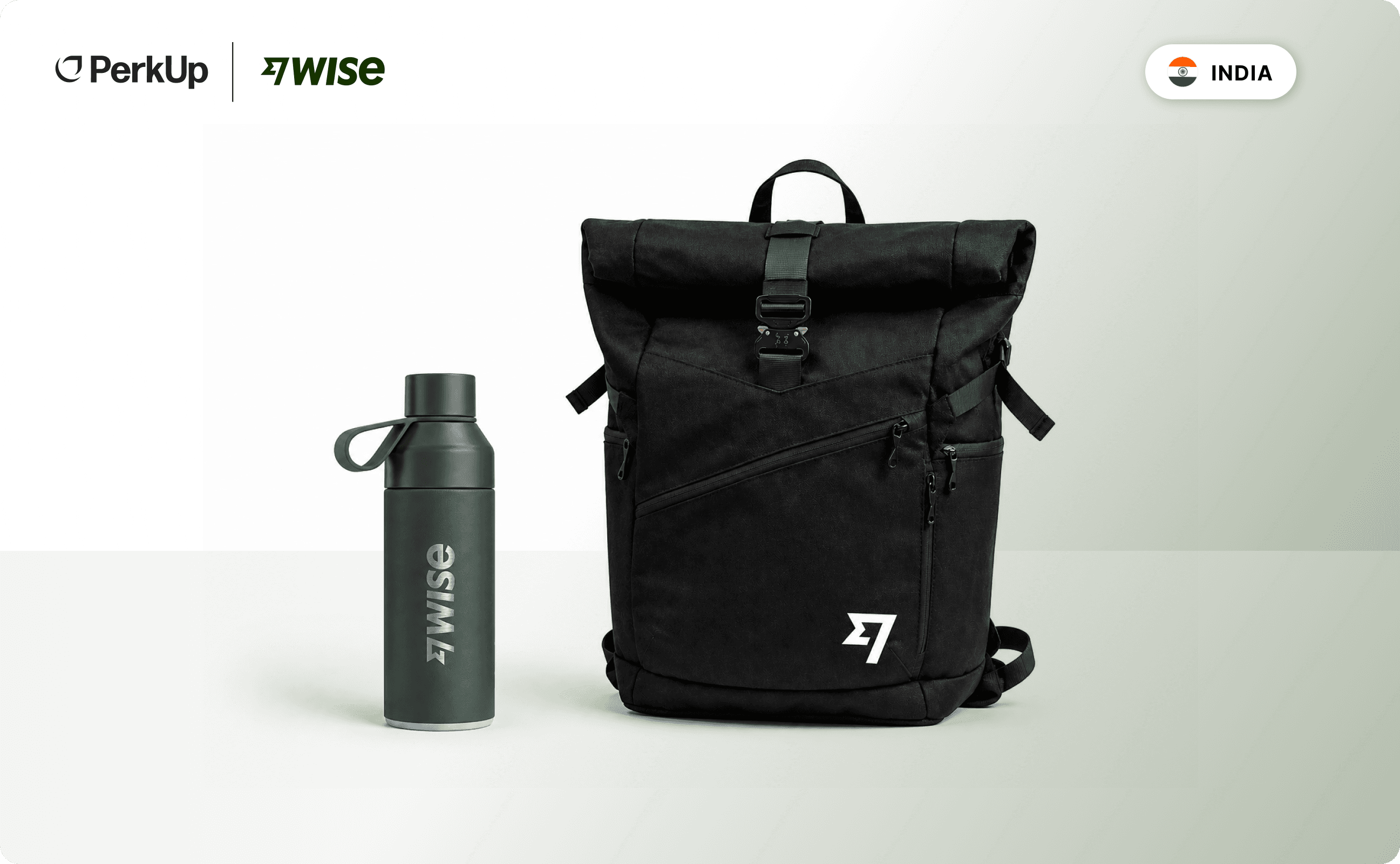
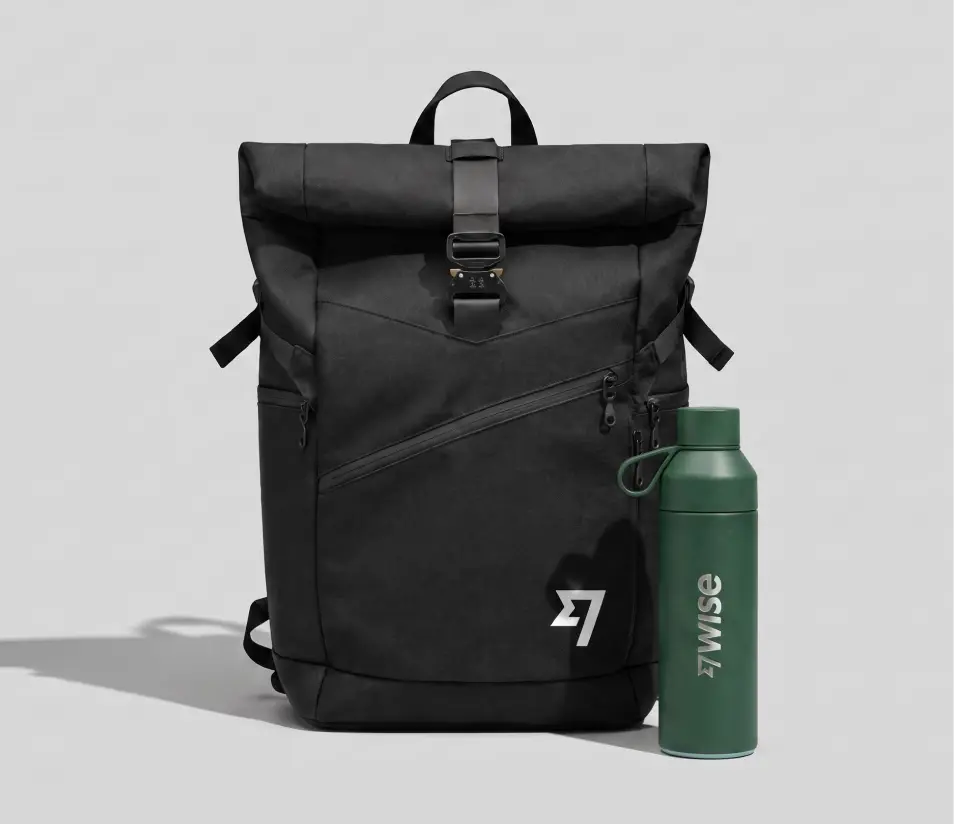
Wise runs a hybrid new hire kit program with PerkUp for its India-based team. For instance, their chosen Rupt backpacks are shipped in internationally because they’re a branded item central to Wise’s global kit identity. The water bottles, one of the trickiest categories for Indian customs, are produced locally in India, avoiding the clearance risk entirely and keeping the kit timeline predictable.
Cornerstone OnDemand: 25th anniversary swag
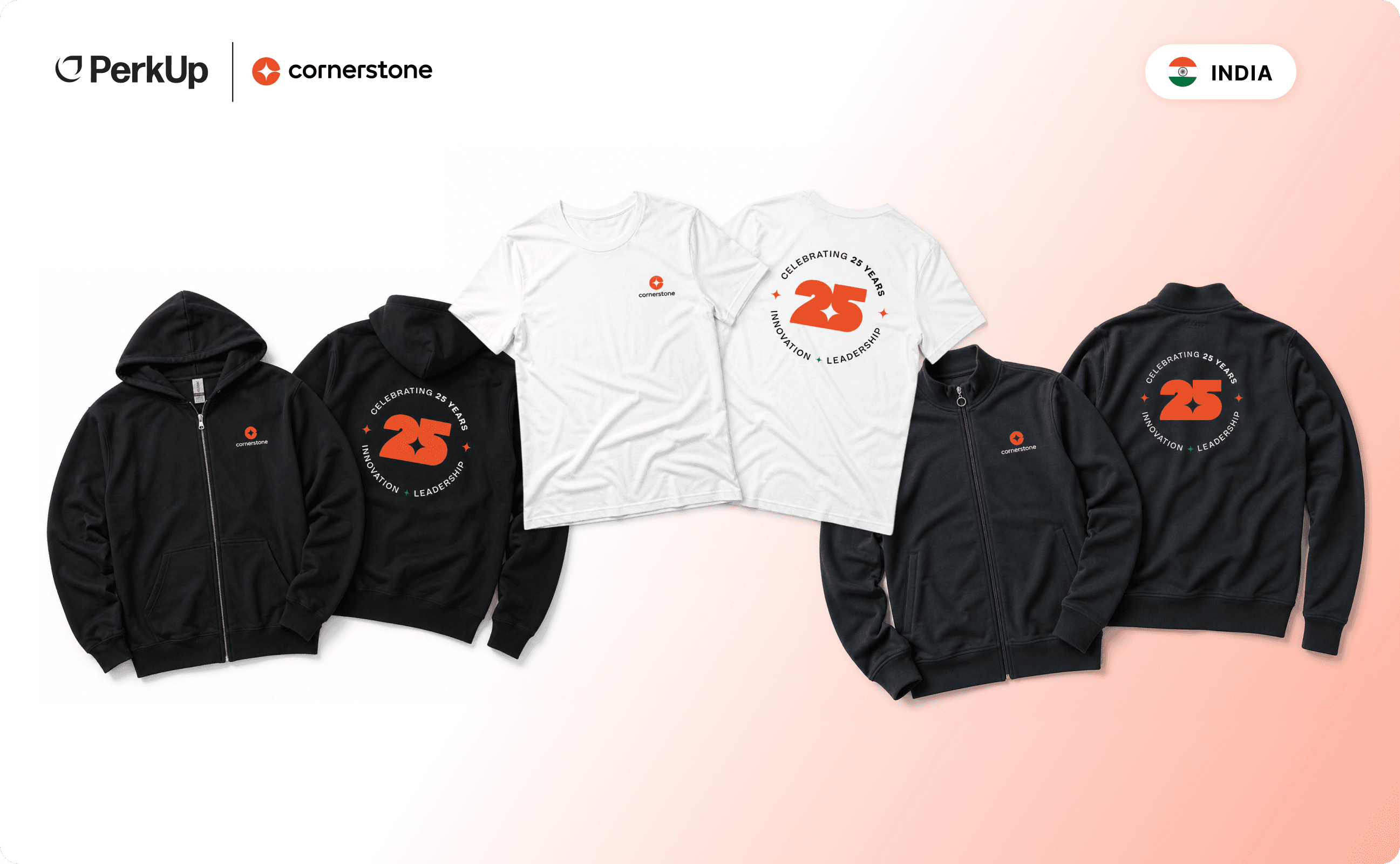
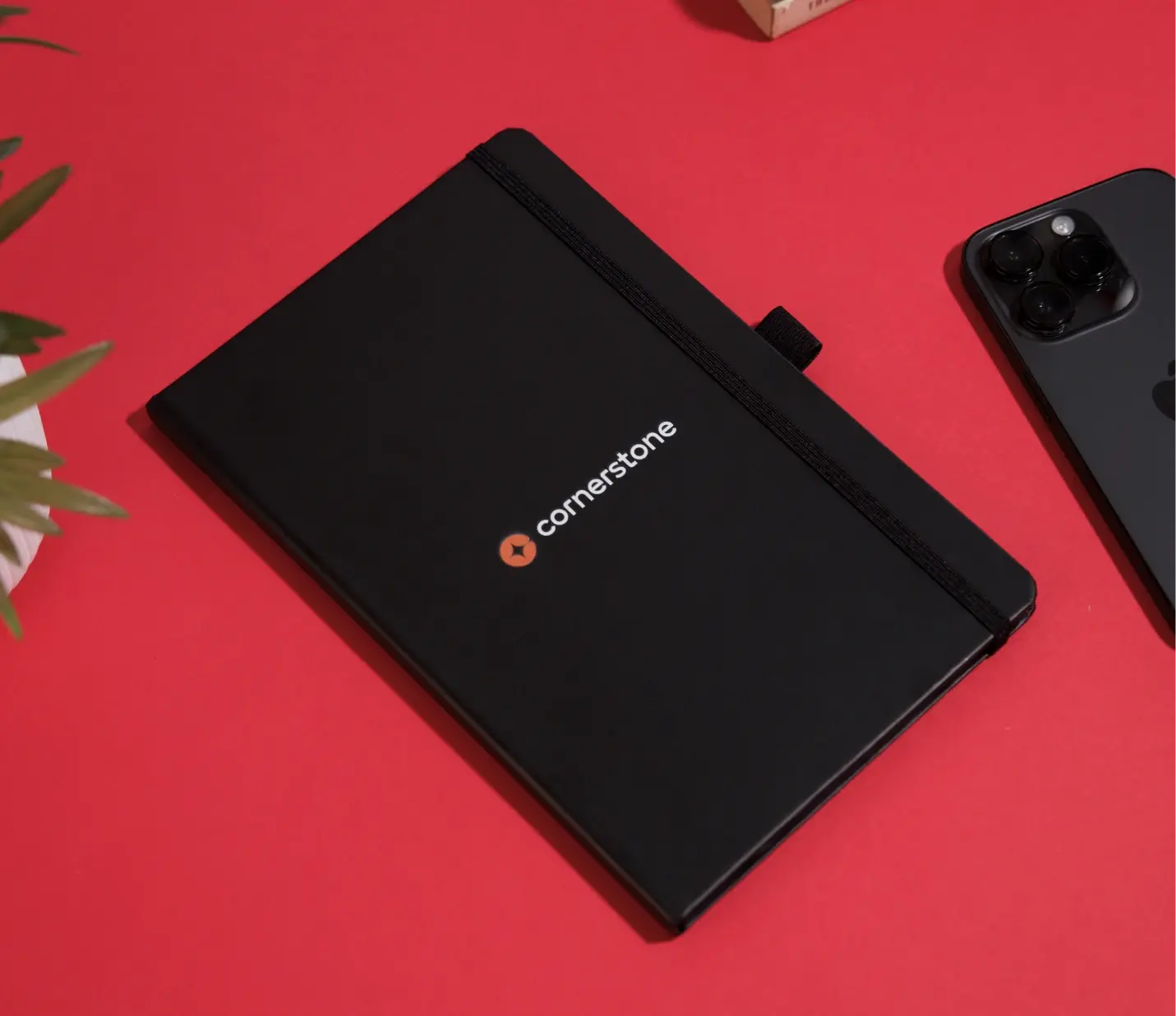
For Cornerstone’s 25th anniversary event, the company ran a virtual metaverse experience for its employees globally. For its India team, the commemorative t-shirts and quarter-zip sweaters were produced locally and On Demand by PerkUp’s local supplier partner, meaning Cornerstone’s individual employees received their swag directly without any international shipment at all. It’s a clean example of how On Demand swag local production can scale a global moment to an India-based team without compromise.
Microsoft: watch party swag
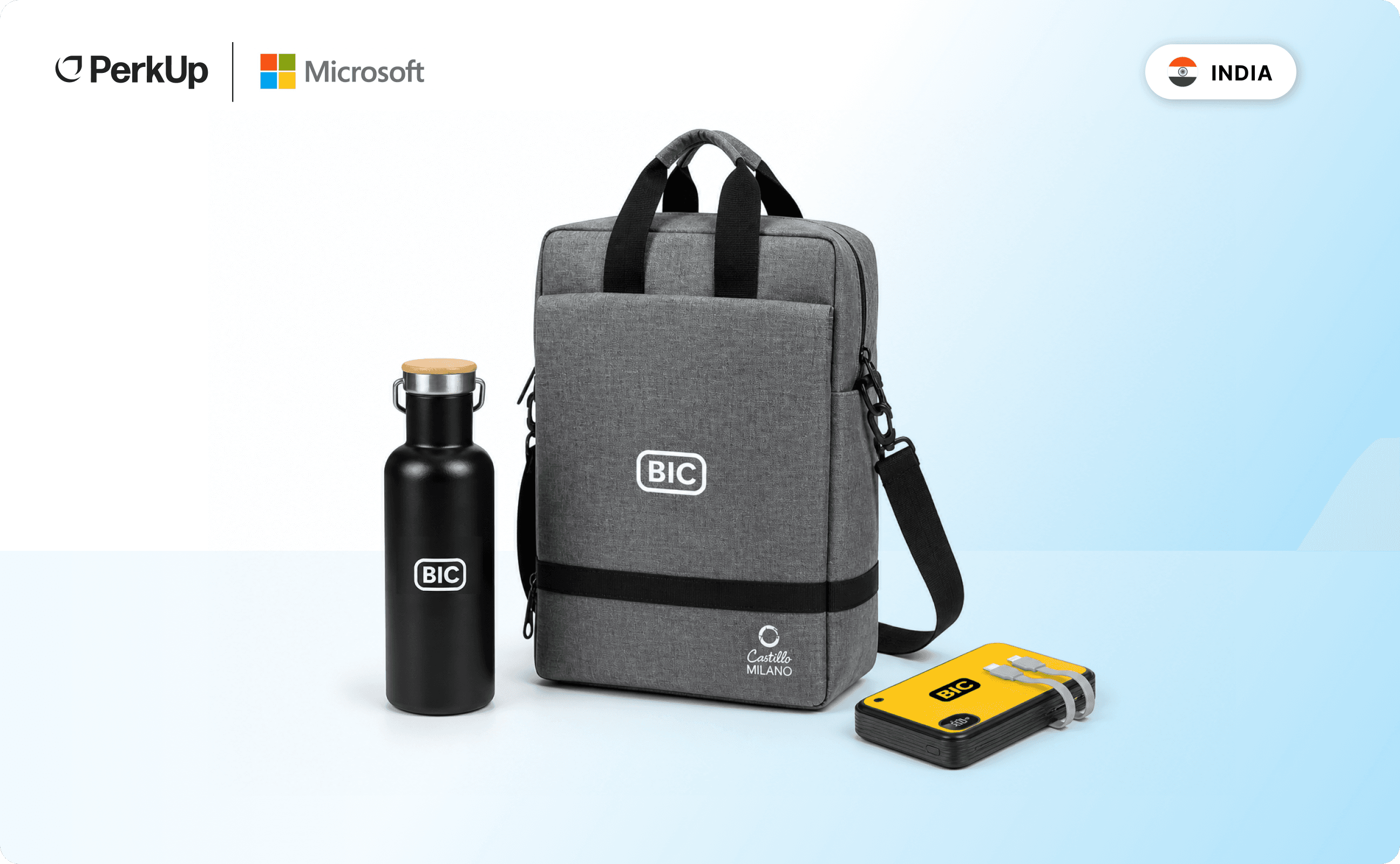
Microsoft runs a regular Watch Party program in India, with region-specific kits sent out around major internal events. Like most of Microsoft’s swag programs with PerkUp, the platform leaned on locally sourced production and careful item selection, specifically polos, drinkware, and branded extras that fit comfortably within Indian customs guidelines.
Third Bridge: new hire swag
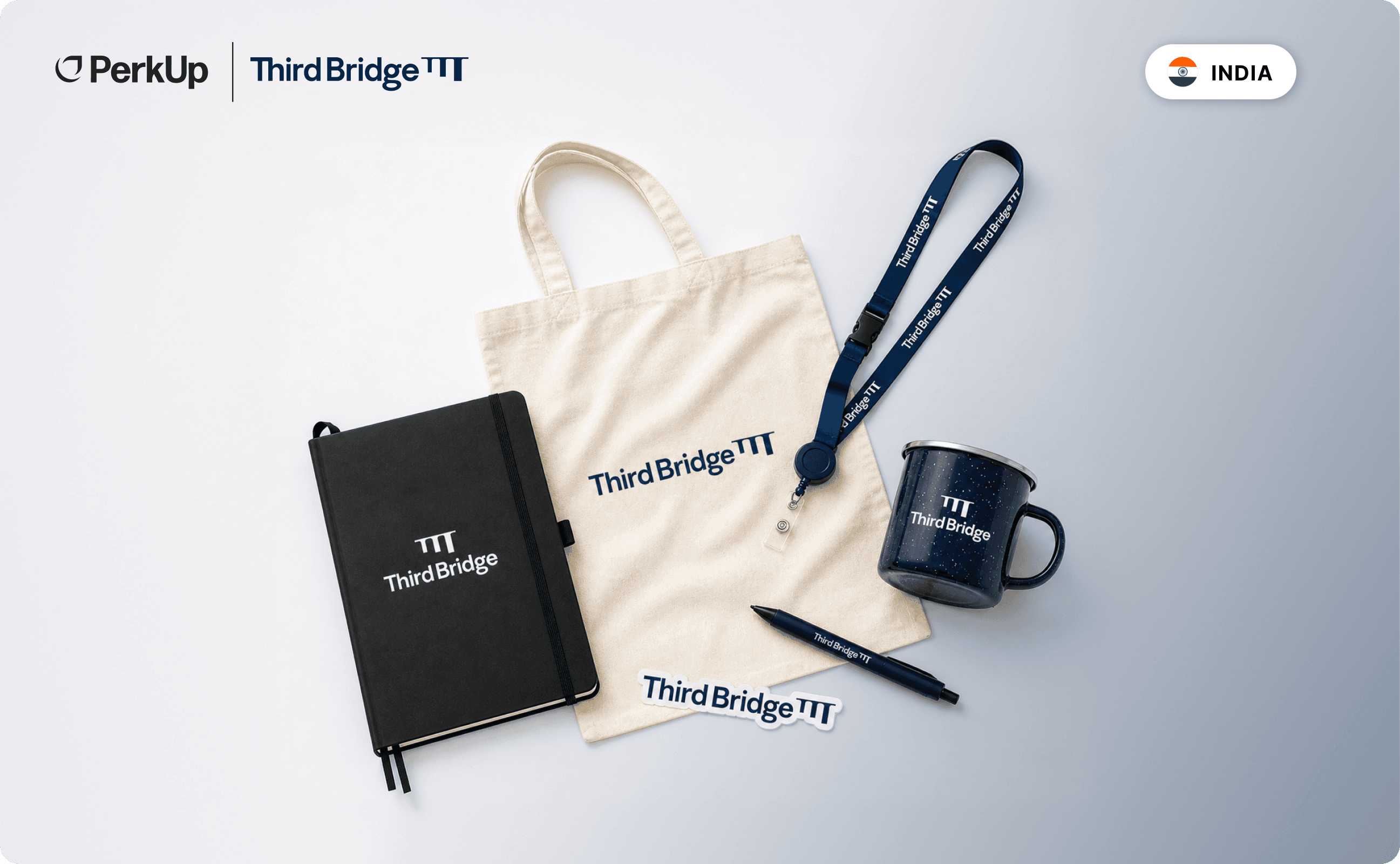
Third Bridge runs new hire swag programs across its Mumbai, Shanghai, and Dallas offices simultaneously, with each region’s kit produced and shipped locally rather than centralized in a single warehouse. With PerkUp’s local production and warehouse in India, as well as China and the US, Third Bridge can easily pull this off without any challenges.
Turing
Leadership offsite kits
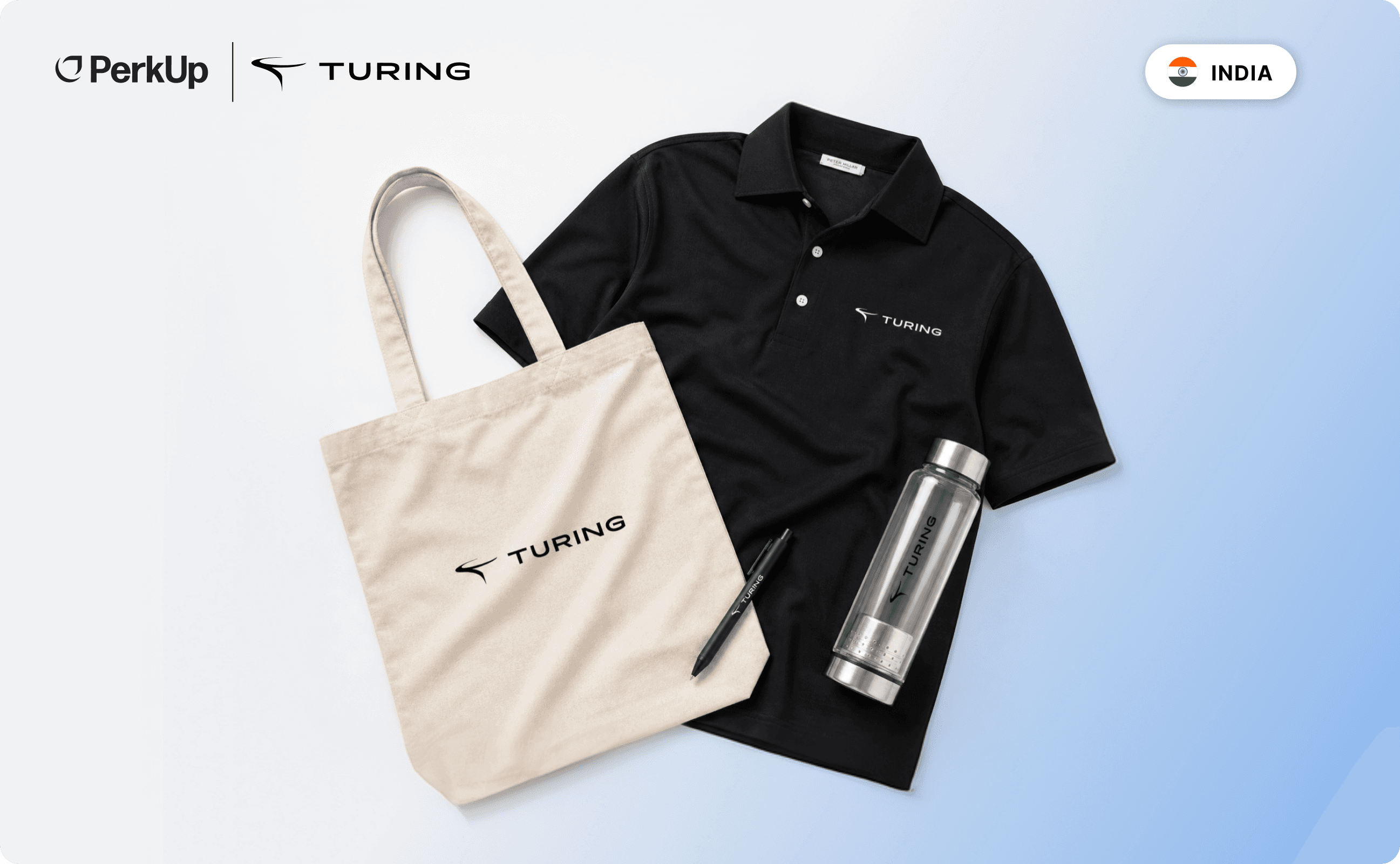
Turing shipped a leadership offsite kit into India, along with a smaller recognition gifting tier that included headphones. Both followed the same strategy: treat India as its own production and fulfillment entity within the larger global program, rather than trying to ship everything from a central US or EU warehouse.
Recognition gift
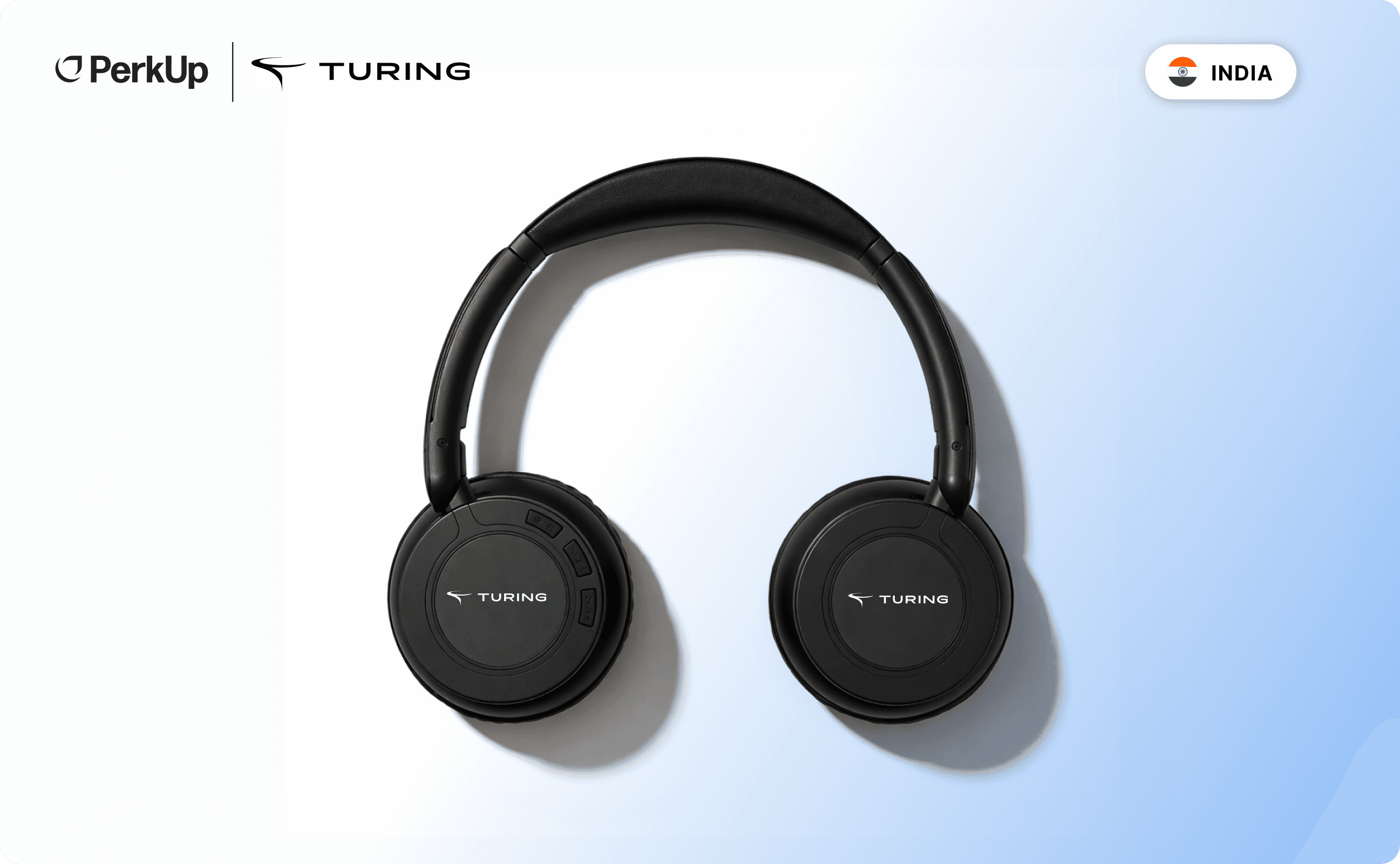
Alongside the leadership kits, Turing used premium headphones as a recognition gift for an India offsite event. PerkUp handled the sourcing and delivery so the headphones reached recipients on time for the event, without Turing having to navigate the compliance and clearance details.
New hire kit
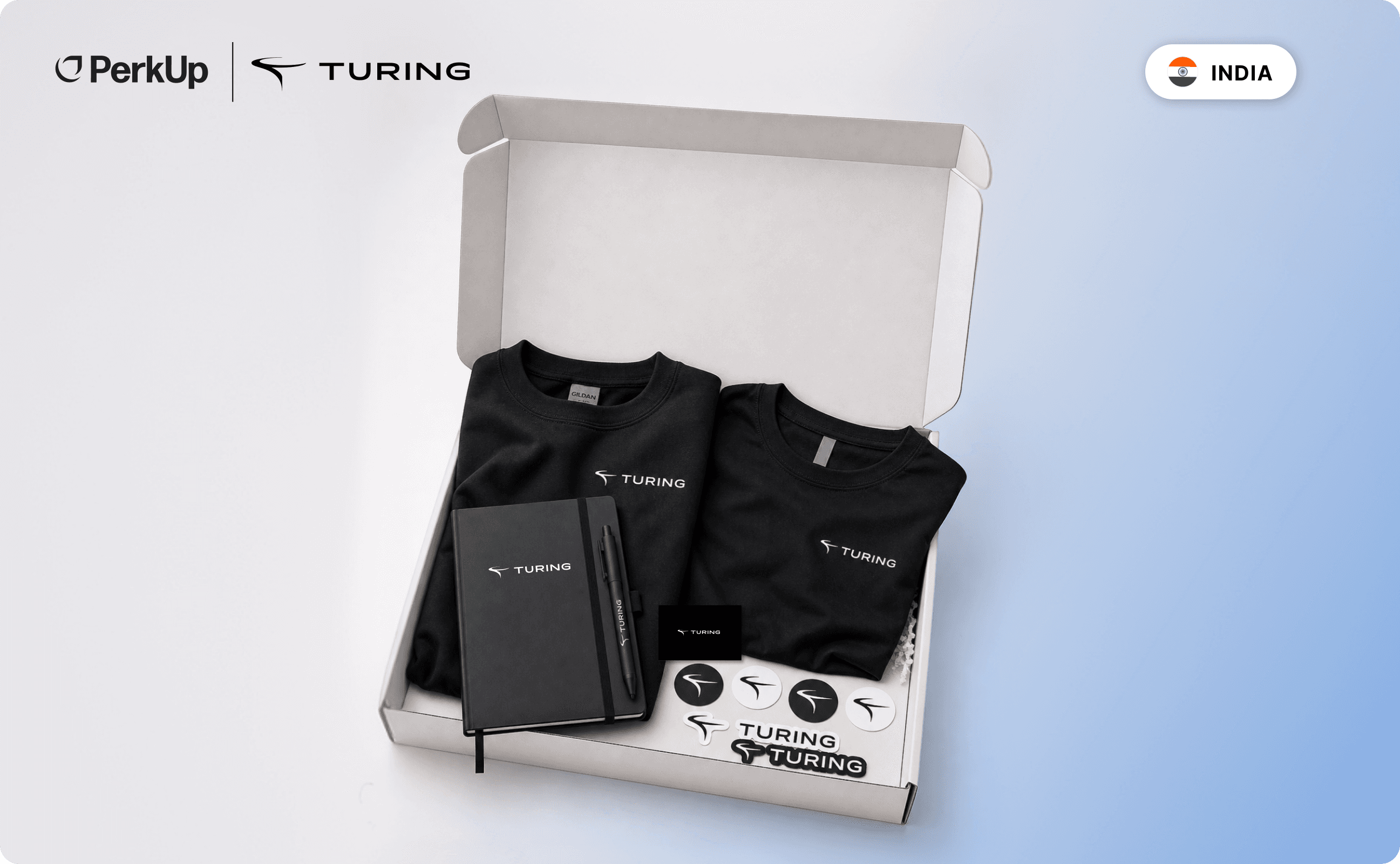
For its India-based new hires, Turing sends the same new hire kit that US hires receive. The kit is produced locally inside India rather than shipped from a central US warehouse, but the items, branding, and unboxing experience line up with what a new hire in San Francisco or New York would open on their first day.
For all of these swag campaigns and programs, PerkUp took care of everything. From sourcing and production (both international and local) to fulfillment and delivery, PerkUp worked with its local supply partners and leveraged its local warehouse in the country to ensure a seamless swag campaign for its various clients.
Final Thoughts
Shipping swag to India gets dramatically easier the moment you stop treating it as an international logistics problem and start treating it as a sourcing problem. The teams getting this right are the ones with the right mix of imported and locally produced items, a realistic timeline, swag ideas that reflect what India-based recipients actually enjoy using, and a swag platform like PerkUp that handles everything for them.
Want to see how an India order comes together in practice? Book a demo with PerkUp, and we’ll walk through it with you.
Frequently Asked Questions about Shipping Swag to India
Can PerkUp actually ship swag directly to India?
Yes. PerkUp ships to India through a global network that includes domestic production partners and warehouse capacity inside the country. Some Indian orders also use a hybrid model: some items are imported from an overseas warehouse, and others are produced locally to avoid customs friction. The right mix depends on the items involved, the timeline, and the volume.
What handles the customs, duties, and tariffs when shipping swag to India?
For international shipments, PerkUp ships delivered duty paid (DDP) wherever possible, which means duties and taxes are prepaid and already included in the order cost rather than passed to the recipient at the border. If unexpected customs or duty fees come up, PerkUp reimburses them too. Local production orders inside India don’t cross a customs border at all, so this question simply doesn’t apply to those.
Which swag items are hardest to ship into India?
The usual items are drinkware (particularly insulated or electronic), tech accessories that include lithium batteries, used electronics, and anything that falls under India’s restricted categories. When a kit calls for one of these items, the cleaner approach is to produce it locally rather than try to push it through customs. PerkUp’s in-country supplier network covers most of these ‘difficult’ swag categories, including drinkware, tech accessories, and more.
Does PerkUp have local production partners inside India?
Yes! PerkUp has both On Demand and bulk production partnerships in India, plus warehouse partners who advise on what can and can’t be imported.
Can PerkUp handle swag for global teams with India as one of several countries?
Most definitely. PerkUp, after all, is built for swag for global teams and ships to more than 65 countries. The same hybrid logic that works for India (local where it makes sense, imported where it needs to be) applies to every other market PerkUp supports. Whether you’re running swag for an India-only program or a simultaneous rollout across APAC, EMEA, and the Americas, it’s all managed from a single platform.